UK National Insurance D-Day: The 15% Employer Rate Is the Case for Hospitality Automation
April 6 raises employer NICs from 13.8% to 15% and cuts the secondary threshold from £9,100 to £5,000. Every front-of-house headcount becomes a fixed cost UK operators will look to substitute with AI scheduling, kiosks, and back-office automation.
I am standing in the back office of a 90-cover restaurant just off Charlotte Street in London at 9:14 on a Sunday morning. The general manager has his laptop open to the rota, a coffee going cold next to it, and he is doing the thing every UK operator is doing today: re-running next week’s labor cost with the new employer National Insurance numbers plugged in. Each shift line ticks up by a few pounds. The full-week total moves by a number that is not catastrophic on its own but is, very clearly, the difference between a host stand staffed at lunch and one that is not.
This is what April 6, 2025 looks like on the ground. Not a press release. A spreadsheet that no longer balances the way it did on Saturday.
Today the employer rate of National Insurance Contributions rises from 13.8% to 15%. At the same time, the secondary threshold — the wage level at which employers start paying NICs on each worker — drops from £9,100 to £5,000. The Employment Allowance, which lets the smallest employers offset their NIC bill, rises from £5,000 to £10,500. Those three numbers are the entire story, and they pull in different directions depending on how many sites you run.
My read: this is the most concrete labor-cost catalyst for hospitality automation the UK has produced in a decade. Not because the headline rate move is dramatic — it is not — but because the threshold cut quietly turns part-time, front-of-house labor into a category that now carries employer NICs from almost the first hour worked. That is the line item operators will go looking to substitute.
What changed on Sunday morning
Three things, all live from today.
First, the employer NIC rate moves from 13.8% to 15%. On a £30,000 salary above the threshold, that is roughly an extra £360 a year per head — manageable on a single hire, painful at scale.
Second, the secondary threshold falls from £9,100 to £5,000. This is the one operators were not pricing properly into the autumn rota. Every employee who earns above £5,000 a year now generates employer NICs on the slice between £5,000 and £9,100 that used to be free. For a part-time waiter on £12,000, that band alone is roughly £615 of new employer NICs at the new 15% rate — a cost that did not exist last week.
Third, the Employment Allowance roughly doubles, from £5,000 to £10,500. A single-site independent with a handful of staff will absorb a meaningful chunk of the new bill against the larger allowance. A 12-site group will not — the allowance is per-employer, not per-site, and it is dwarfed by the threshold cut once you are paying any number of part-timers above £5,000.
UKHospitality has put the sector-wide cost at roughly £1bn. The trade body’s chief executive, Kate Nicholls, has been blunt about the shape of it: “The change to employer NICs is one of the most regressive tax changes ever… This tax is already forcing businesses to abandon investment, change recruitment plans, reduce headcounts and increase prices to cope with these cost increases.” That language — “abandon investment, change recruitment plans, reduce headcounts” — is the operator-side translation of what I am watching the GM do with his rota. The full UKHospitality campaign page is at ukhospitality.org.uk/campaigns/national-insurance-contributions, and Restaurant Online ran the £1bn figure in its January piece on the threshold change.
Why the £5,000 threshold matters more than the headline rate
If you only read the rate move — 13.8% to 15% — you would think this is a 1.2-point story. It is not. The threshold cut is what reshapes the marginal hire.
Under the old £9,100 threshold, a 16-hour-a-week waiter on £11 an hour generated almost no employer NICs at all. Under the new £5,000 threshold, that same shift pattern is squarely inside the NIC base. The employer is now paying 15% on the slice between £5,000 and whatever the worker earns above it, on top of wage, on top of holiday pay accrual.
That is the entire game. The part-time, flexible, weekend-heavy front-of-house roster — the labor model that lets restaurants flex into Friday dinner and Sunday lunch — just became the most NIC-exposed category in the building.
Front-of-house is a fixed cost now in a way it was not on Saturday. And fixed costs are what operators look to substitute.
Where the automation dollar goes first
This is the part I have been waiting on for two years. The UK hospitality automation conversation has been theoretical — kiosks would be nice, AI scheduling would be nice, back-office automation would be nice — because the labor math never quite forced the issue. As of this morning, it does.
The substitution playbook, in the order I expect operators to run it:
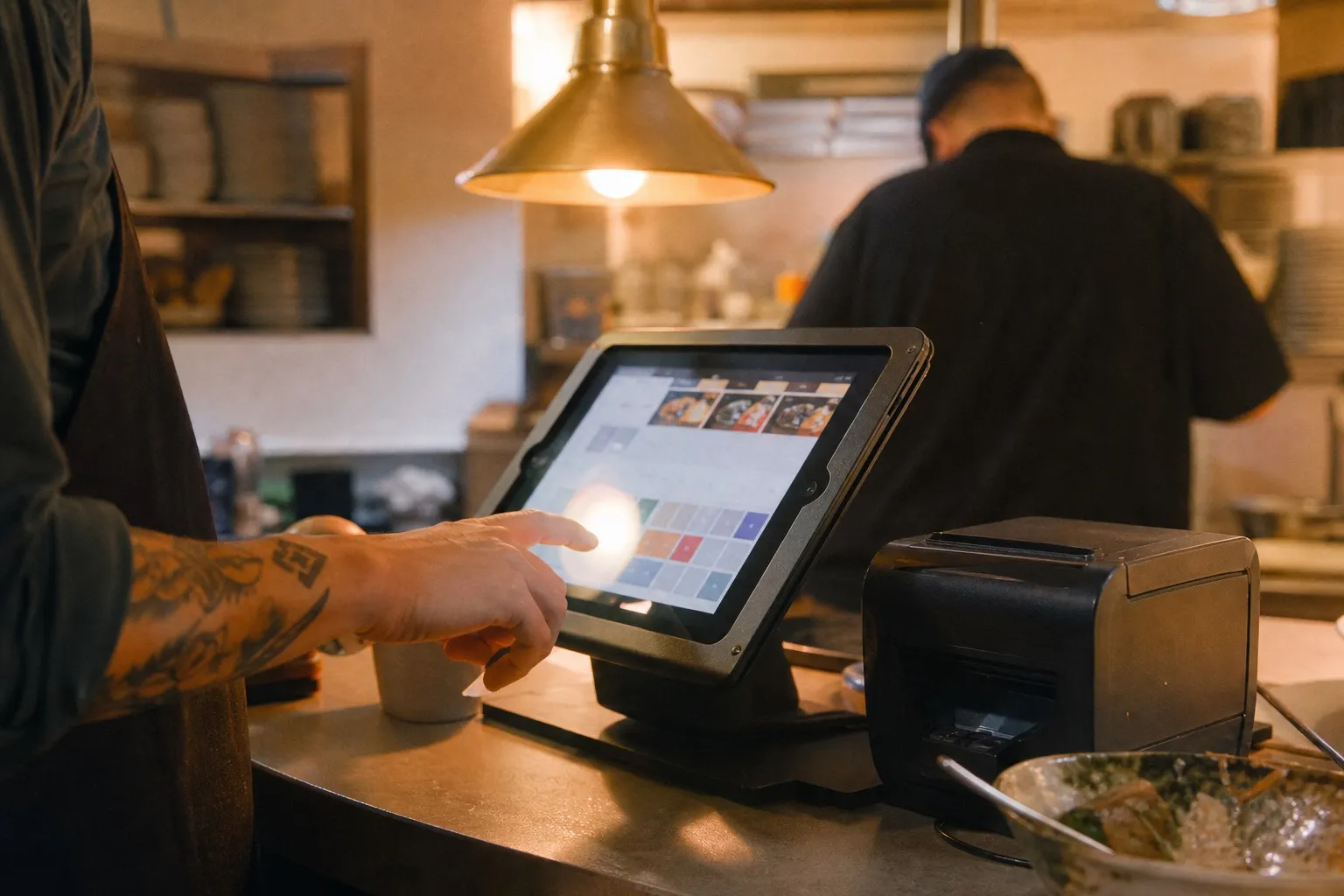
Kiosks and QR-order at the front. Anywhere a host or counter person was taking an order, the NIC math now subsidizes the kiosk. This is not about replacing servers wholesale — it is about cutting one part-time shift per site per day and routing those orders through a screen. The payback period on a kiosk just shortened by months. As Harpers reported in their coverage of the budget reaction, operators were already modeling tech substitution before today; the threshold cut is what moves it from model to PO.
AI scheduling in the back office. The second-order effect of the threshold cut is that getting the rota wrong now costs more per hour. Tools that optimize part-time shift coverage against forecast demand — the Nory-style category — convert directly into NIC savings. The pitch is no longer “save 2% on labor.” It is “pay for itself against the threshold cut alone.”
Back-office automation — invoice capture, stock counts, payroll prep. None of this is glamorous, but each one removes hours of admin from a site-level manager whose own employer NIC bill just went up. This is where the multi-site groups, who cannot lean on the Employment Allowance, will spend first.
The investor angle is not lost on me. As we argue in a later Bottom Line piece on the AI premium in restaurant-tech M&A, the UK is now the most concretely catalyzed labor market in the Western hospitality automation story — and the platform shift we covered in a later piece on the marketplace-to-SaaS shift at DoorDash is the same shape, one layer up.
The pragmatic read: today is not the day operators panic. It is the day they line up the capex requests they were not going to sign in Q1 and start signing them in Q2.
— Luca covers restaurant operators. Tips: [email protected].
Featured
More
Browse all 494 posts
The Voice Agent Maturity Curve
mise
·12 min read
The Four Margins of a Restaurant
mise
·14 min read
The AI Premium in Hospitality M&A: Broker Story or Real Number?
the bottom line
·9 min read
What the DoorDash/SevenRooms Deal Actually Buys
the bottom line
·11 min read