US Foods Just Had a Quietly Excellent Quarter

A 9.3% EBITDA bump and a $1B buyback show US Foods is winning the post-Sysco share war — and the 2.5% independent volume growth is the only operator-side data point that matters.
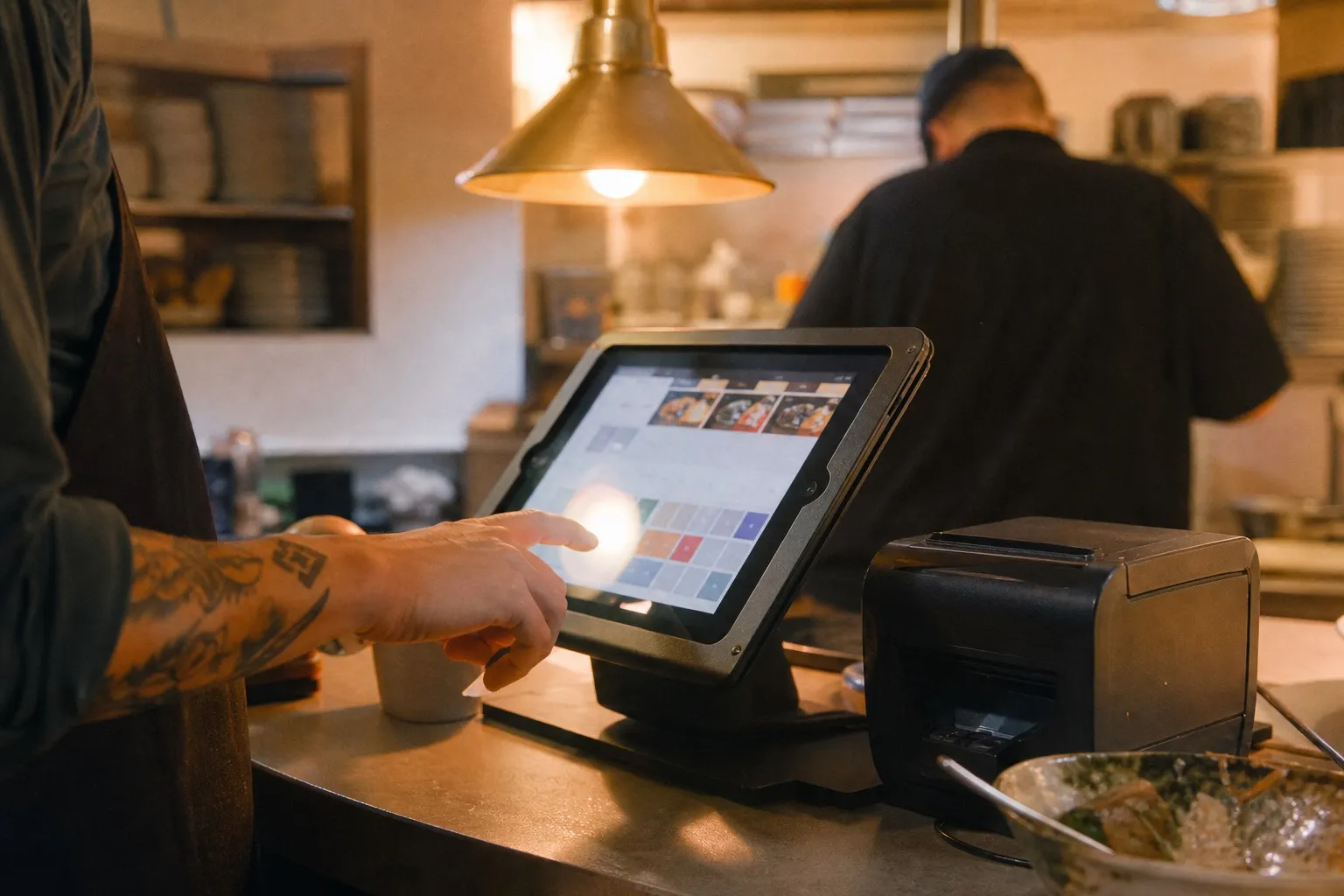
I was scrolling the US Foods Q1 release on my phone this morning, leaning against a streetlight on Smith Street in Brooklyn, when a USFD van pulled up and double-parked outside a wine bar that has been open maybe six months. The driver popped the back and started wheeling in cases of produce while the chef-owner held the door with her hip. I watched the whole thing and thought: this is what a 2.5% number looks like on the ground.
Because that is the number from this quarter that actually matters. Not the headline net sales of $9.4 billion, up 4.5%. Not even the adjusted EBITDA of $389 million, up 9.3% — though we will get there. The line to circle is independent restaurant cases up 2.5%. That is the volume line. That is the operator-side data point. Everything else is finance.
The distribution rollup is consolidating around USFD, not Sysco
My read: this is the quarter where the post-Sysco share war stops being a war. US Foods grew independent volume 2.5% while the broader independent restaurant market is, by most operator checks I have run lately, flat-to-down. That is not a tie. That is share take. And it is happening while Sysco is leaning harder on international and specialty segments to fill the gap in domestic independent case growth.
The capital return signal is what made me write this up today instead of waiting for the call transcript. A fresh $1 billion buyback, on top of the existing program, at 2.7x net leverage — that is not a company managing through a soft patch. That is a company that has decided the M&A pipeline will not absorb capital fast enough and is willing to lean into the equity instead. CFOs do not authorize a billion-dollar buyback at that leverage unless they are confident the cash flow trajectory holds.
And it does hold, because of the volume mix. Independent cases are the highest-margin business US Foods does. Chains are a scale game; independents are a margin game. When independent volume grows 2.5% and total adjusted EBITDA grows 9.3% on net sales up 4.5%, you are getting operating leverage on the mix, not just on price. That is the thing the sell-side keeps under-modeling.
Dave Flitman is running a different playbook than Sysco
Flitman took over as CEO last year and has been quietly reshaping the cost structure — closing underperforming distribution nodes, consolidating the chicken protein supply chain, rationalizing the private-label SKU count. None of it shows up as a single line on the release. All of it shows up in that 9.3% EBITDA growth on 4.5% sales growth.
Compare that to the Sysco approach, which has been about top-line case growth at any cost, especially in chains, where margins are thinner. My read: the market has been pricing these two as a duopoly with similar trajectories. They are not. Flitman is running a margin-and-mix book. Sysco is running a volume-and-scale book. Over a full cycle, the margin-and-mix book wins capital allocation flexibility — and in a fragmented industry, that flexibility is what funds the next leg of consolidation.
This is why I think the distribution rollup phase consolidates around USFD, not Sysco. The buyback says US Foods does not need to roll up anyone right now — but if a Performance Food Group or a regional player comes available at a reasonable multiple, USFD has both the balance sheet and the operating discipline to integrate it without breaking the EBITDA trajectory.
What I am watching for the rest of the year
Three things. First, whether independent case growth holds above 2% through Q2 and Q3 — that is the cycle test. Second, the buyback pace as an M&A appetite tell: burn the $1 billion in six months and the rollup is paused; stretch it across 18 months and something is in the pipeline. Third, whether the chains business stabilizes — that segment was the drag last year, and as our later coverage of OpenTable’s AI strategy frames it, the chain operators are the ones spending on tech and platform deals right now, so the volume should follow the spend.
If you are an operator: this quarter is not really about you, except that your USFD rep is about to get more aggressive on pricing in your category to defend that 2.5% number. Use it. Ask for the line you have been quietly losing on the last three orders. The rep has cover to give it back this quarter in a way they did not three months ago. The wine bar on Smith Street is going to get a slightly better deal on its next order. Multiply that by every independent on a USFD route, and you have the back half of the year.
— Hana edits The Pass. Tips: [email protected].
Featured
More
Browse all 494 posts
The Voice Agent Maturity Curve
mise
·12 min read
The Four Margins of a Restaurant
mise
·14 min read
The AI Premium in Hospitality M&A: Broker Story or Real Number?
the bottom line
·9 min read
What the DoorDash/SevenRooms Deal Actually Buys
the bottom line
·11 min read