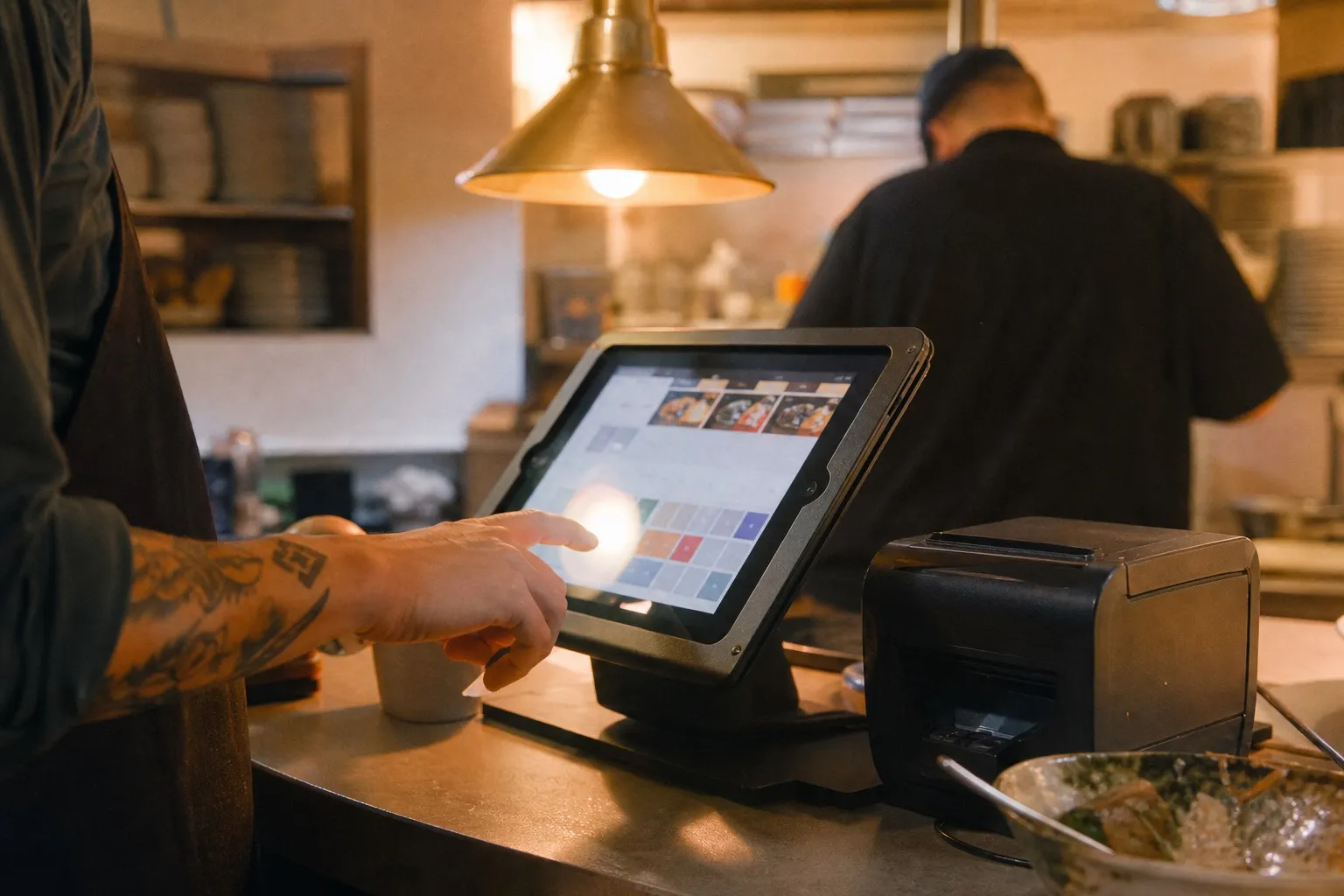
Wendy's FreshAI On Track for 500-600 Locations

Wendy's and Google's FreshAI voice agent is scaling from 160-plus drive-thrus toward a 500-600 footprint by year-end. Matt Spessard's 86% pilot accuracy remains the moving baseline, and Kirk Tanner runs it himself three to four times a week.
I keep a small notebook of numbers I refuse to let chains round off in public, and the top line in 2025 belongs to Wendy’s. In December 2023, then-CIO (now SVP/CTO) Matt Spessard told an audience at Google Cloud’s industry event that “our accuracy during the pilot … averaged 86%.” Eighteen months later, that number has become the most consequential baseline in quick service — not because 86% is impressive, but because it is the floor Wendy’s is publicly scaling above. The chain’s own May update reiterates the trajectory: from the 100-plus restaurants live at the end of 2024 to a 500-to-600-location footprint by year-end 2025. That is not a pilot anymore. That is a rollout with a denominator.
The 86% number is doing more work than people realize
When Spessard first floated 86%, the temptation among competitors was to read it as a ceiling — proof that drive-thru voice AI couldn’t quite clear the bar a human order-taker clears on a Saturday rush. Two years on, the reading inverts. Wendy’s has kept publishing, kept expanding, and kept reusing the same baseline language. The pilot accuracy figure is now the moving floor: the number above which every new market deployment must perform, and below which the program would presumably stall. The chain’s May post does not give a new accuracy headline, which I read as deliberate. They have stopped marketing the score and started marketing the footprint.
That footprint matters because the comparables are unforgiving. McDonald’s pulled its IBM-powered AOT test in mid-2024. Carl’s Jr. and Hardee’s have been quieter on numbers than on press releases. Wendy’s, with Google as the model partner and Hyundai as the menu-board hardware partner, is the only U.S. chain in 2025 publishing a four-figure-adjacent target with a calendar date attached. The 500-to-600 range is not a marketing aspiration; it is roughly a tenth of Wendy’s U.S. system, and it is the size at which operating leverage starts to show up in unit economics rather than novelty press.
Spanish, the CEO test, and the things that are not in the deck
Two details from the May update deserve more attention than they got. First, FreshAI is now live in Spanish — a deployment choice that quietly tells you which markets the 500-600 target is concentrated in. Texas, California, Florida, the Southwest. The Spanish rollout is the unstated geography of the expansion. Second, CEO Kirk Tanner told Restaurant Business he uses FreshAI himself three to four times a week. I am generally skeptical of CEO-eats-the-dog-food anecdotes, but Tanner’s version is unusually specific, and the cadence is the giveaway. A chief executive ordering through his own voice agent multiple times a week is not a PR line; it is a feedback loop. Whatever the bot mishears on Tanner’s order is a defect ticket that lands on Spessard’s desk within the hour.
What is not in the deck is equally telling. There is no published handoff rate — the percentage of orders escalated to a human team member. There is no average ticket comparison versus the human-only baseline. There is no upsell-conversion number, despite “personalized recommendations” being the third bullet on the May post. These are the metrics that will matter at 600 stores, and Wendy’s is sitting on them. The chain is buying time to tune them before they become the next public benchmark.
What this means for everyone else
For franchisees, the 500-600 number is the first real signal that drive-thru AI has crossed from R&D line item to capex line item. Hyundai’s digital menu boards are the hardware refresh vehicle, which means an operator signing up for FreshAI is also signing up for a board replacement they would otherwise have deferred. That bundling is the quiet commercial innovation here — the AI is the reason to do the hardware, the hardware is the reason to do the AI, and the franchisee gets to capitalize both on the same depreciation schedule.
For competitors, the takeaway is harder. Wendy’s is going to spend the back half of 2025 generating the only large-sample-size, English-and-Spanish, real-traffic dataset of voice-AI drive-thru orders in the U.S. system. Whatever model Google trains against that data will be very difficult to catch from behind in 2026. The window for a fast-follower strategy is closing now, not at the end of the year.
And for the regulatory backdrop — a forthcoming May piece on the EU AI Act’s foundation-model obligations makes the point that customer-facing voice systems will need disclosure regimes faster than most chains are planning for. FreshAI’s bilingual rollout is the kind of deployment that will eventually require a posted notice at the order point. Wendy’s has time. Most others do not.
I will be watching the September earnings cycle for the first store count update against the 500-600 target. If they hit the bottom of the range by then, the rest of QSR will be reading from this playbook by Q4.
— Luca covers restaurants for TableTransfers. Tips: [email protected].
Featured
More
Browse all 494 posts
The Voice Agent Maturity Curve
mise
·12 min read
The Four Margins of a Restaurant
mise
·14 min read
The AI Premium in Hospitality M&A: Broker Story or Real Number?
the bottom line
·9 min read
What the DoorDash/SevenRooms Deal Actually Buys
the bottom line
·11 min read