Wingstop's Digital Mix Hits 72.2% — What That Means for Everybody Else
Wingstop's Q2 2025 print landed Wednesday morning with a number worth staring at: 72.2% of system-wide sales now go through digital. When the digital majority gets that lopsided, the back-of-house AI math — forecasting, prep, labor — starts to dominate brand economics.
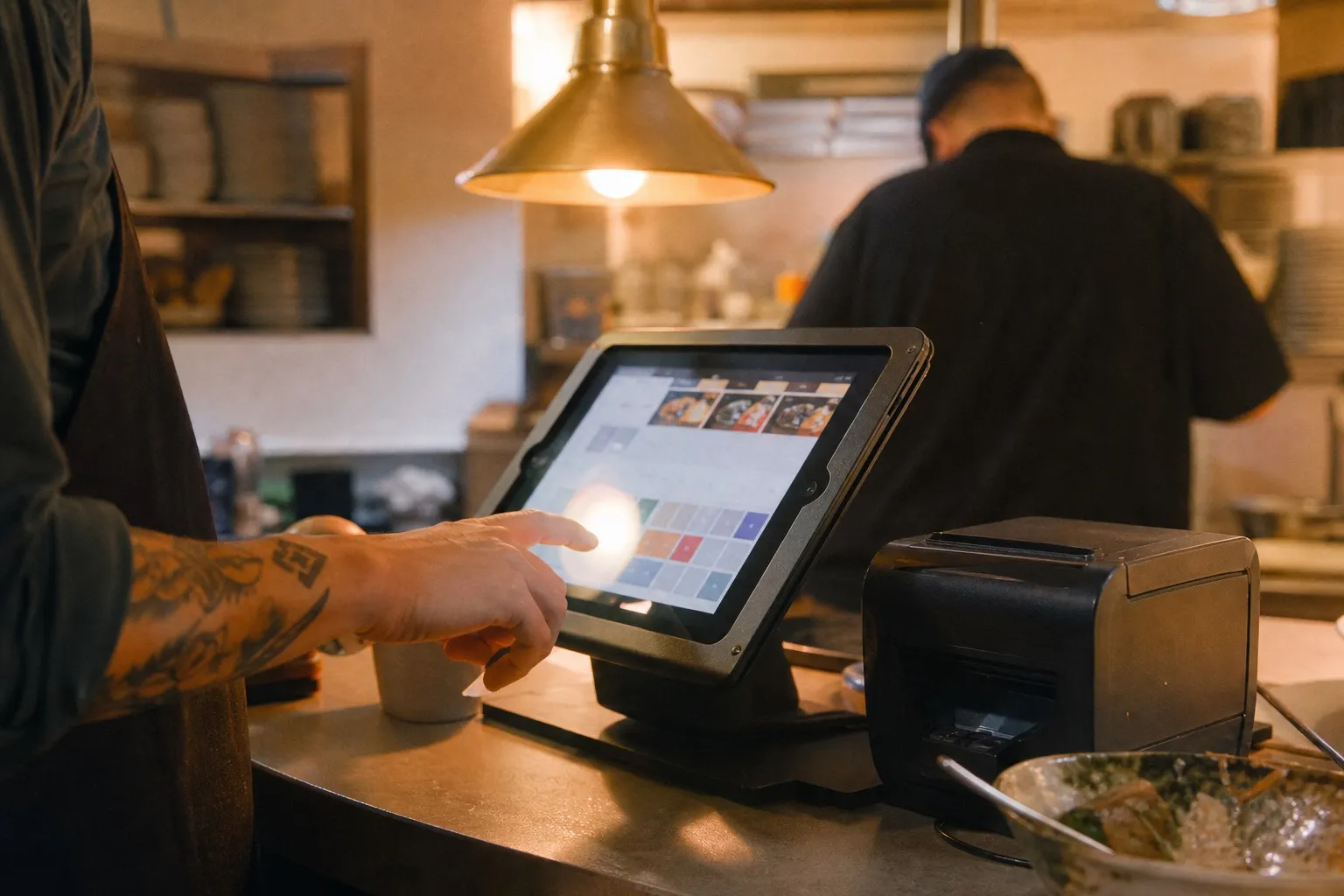
I spent Wednesday morning rereading Wingstop’s Q2 release on a kitchen pass in Carroll Gardens while a line cook ran a Friday prep board entirely off a tablet. He told me three of the next six tickets were already plated before the guests ordered them — a forecast model had pre-staged the wings. That’s the picture you should hold in your head when you look at Wingstop’s Q2 2025 8-K: a brand where the order isn’t an event anymore. It’s a data point that arrived earlier than the guest.
The contrarian read on this print is not the same-store sales miss. It’s that when 72.2% of system-wide sales move through digital, the back-of-house AI math — forecasting, prep schedules, labor lay-down — quietly starts to dominate brand economics. Marketing, menu engineering, even unit-level service all get re-pointed at feeding the model. Wingstop is a live preview of where every QSR ends up. Watch it carefully.
The number that matters isn’t the one in the headline
The headline trades will be domestic same-store sales down 1.9% against a brutal comp, and they’re fair. Revenue grew 12% to $174.3M, which is the easier story. But the line in the IR commentary worth circling is digital sales at 72.2% of system-wide — up again, and now decisively past the threshold where “digital-first” stops describing the channel mix and starts describing the operating model.
A few quarters ago a digital majority meant you’d retrained your team on tablets and signed a delivery contract. At 72.2%, that framing is wrong. The kitchen is sequencing prep against a demand curve the marketing team partially controls, the forecast model partially predicts, and the guest mostly executes. The store is downstream. The model is upstream.
That changes what AI is for inside a brand like this. It isn’t a chatbot or a price-optimization toy. It’s a forecasting engine wired to a labor scheduler wired to a prep board, and its accuracy is now an enterprise-level KPI. Mark this interpretation: Wingstop’s same-store softness will be solved or unsolved by the back-of-house stack, not by a new flavor drop.
The 129 openings are the giveaway
The other number to stare at is 129 net new openings in the quarter — a record. Brands miss comp and slow the unit pipeline. Wingstop missed comp and opened more stores than it ever has in a single quarter. That’s a tell about where management thinks the durable advantage lives.
You don’t open 129 stores into a soft consumer if unit economics depend on dining-room throughput or local marketing intuition. You open 129 if the unit is a fulfillment node attached to a national digital order book, and standing one up costs about what provisioning a forecast model with another address costs. The franchisee isn’t underwriting a restaurant in the 1995 sense. They’re underwriting a node.
This is also the part of the story where the channel pipes start to matter more than the storefront. We laid out the marketplace side of that pipe in a forthcoming May piece on the DoorDash/SevenRooms tie-up — the demand-side counterparty to what Wingstop is doing on the supply side. The two stories rhyme.
What everybody else should be doing about it
The temptation when a chain hits 72.2% digital is to treat it as a Wingstop fact. It isn’t. It’s a forward indicator. The chains running 40-50% digital today — most of QSR, large parts of fast casual — are on a path that ends in the same place, even if the slope is gentler. The operational decisions that look optional at 50% become structural at 70%.
Three concrete moves worth making this quarter, whether you’re a multi-unit franchisee or a 12-store independent:
- Treat forecast error as a P&L line. Once digital pushes past about two-thirds of orders, every percentage point of forecast error converts directly into either food waste or speed-of-service penalty. Most brands aren’t measuring it as a controllable yet. They should be.
- Re-price the prep board, not the menu. Dynamic pricing gets the press; dynamic prep gets the margin. The model that decides how many wings are in the warmer at 6:42pm has more leverage than the model that decides what they cost. We made an adjacent argument about menu-level pricing capacity in an upcoming May piece on a 12-unit cafe group rebuilding its menu math.
- Audit the labor schedule against the digital curve, not the door curve. If your scheduler still works off historical foot traffic, it’s solving last decade’s problem.
What to watch into Q3
Two things I’ll be tracking. First, whether the digital mix keeps climbing or stalls around the low 70s — there’s a plausible argument it hits a natural ceiling where dine-in fills the residual. Second, whether 129 quarterly openings holds as a new normal or reads, in hindsight, as a pull-forward. The first answers a model question. The second answers a real-estate one. Both will tell us how quickly the category is forced down the same path.
The 72.2% is not Wingstop’s number. It’s the industry’s number, arriving early.
— Luca covers restaurants for TableTransfers. Tips: [email protected].
Featured
More
Browse all 494 posts
The Voice Agent Maturity Curve
mise
·12 min read
The Four Margins of a Restaurant
mise
·14 min read
The AI Premium in Hospitality M&A: Broker Story or Real Number?
the bottom line
·9 min read
What the DoorDash/SevenRooms Deal Actually Buys
the bottom line
·11 min read