Wonder Buys Blue Ribbon Fried Chicken. Marc Lore Is Building the Stack DoorDash Thought It Had.
Seventh acquisition, second of 2026, and Wonder's first brick-and-mortar restaurant deal. The pieces — Grubhub, Blue Apron, Spyce, Claim, and now Blue Ribbon — finally read as a single product. The fast-casual valuation comp just shifted with them.
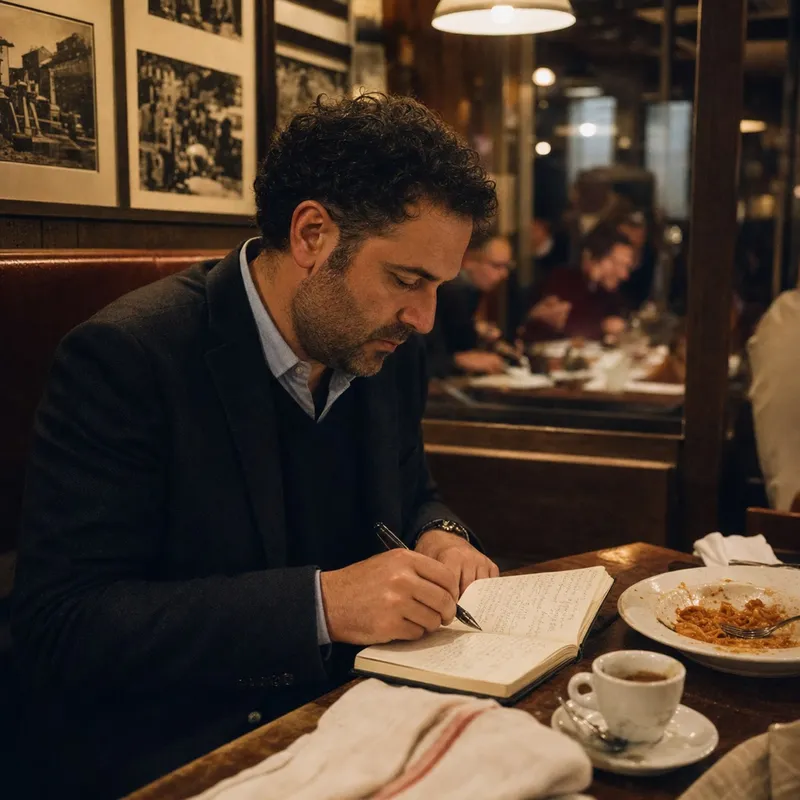
I was on my second espresso at a counter on Mott Street on Tuesday morning when the Wonder release hit my phone. Wonder has acquired Blue Ribbon Fried Chicken from Blue Ribbon Restaurants for an undisclosed sum (PRNewswire). Marc Lore’s quote was the usual line about scaling an iconic brand across the platform. The East Village restaurant keeps trading.
That is the news. The story is the seventh on Lore’s tally, the second of 2026, and Wonder’s first outright restaurant acquisition.
The acquisition ledger
Wonder has, since 2022: bought Grubhub, bought the Spyce robotics IP from Sweetgreen (the deal Priya case-studied here), bought Blue Apron, bought the rewards app Claim in January 2026, and now Blue Ribbon Fried Chicken in February. Every prior deal was software, kitchen-tech, or packaged-goods. Blue Ribbon brings a brand with a kitchen, a 1992 founding date, and a Bromberg-brothers signature.
Read at the press-release altitude, this is a fried-chicken concept joining a food-hall roster. Read at the M&A altitude, this is the seventh piece of an integrated stack that, taken together, is roughly what DoorDash has spent four years assembling.
The stack Marc Lore is actually building
Map the pieces against the categories.
Meal-kit at home. Blue Apron. Last-mile delivery. Grubhub. Kitchen automation IP. Spyce — bought from Sweetgreen in November 2025 for $186.4M, with the four MIT-founder team and 38 engineers transferring over. Wonder has publicly committed to installing the technology in “half of our new kitchens starting in 2027” (Food on Demand). Loyalty. Claim. Marquee fast-casual brand. Blue Ribbon. Owned virtual concepts. Wonder simultaneously launched two of its own — Pop Salad and El Diez Mexican Bowls — across 16 food-hall locations in New Jersey, New York, and Pennsylvania (Restaurant Dive). Physical footprint. 100+ food-hall units along the East Coast, with a stated target of 400 locations by 2027 (RBO).
Now read that list with the names removed. Meal-kit plus last-mile plus kitchen automation plus loyalty plus curated brand portfolio plus physical real estate. That is the product DoorDash has been building since the Bbot acquisition in 2022 — the product Juliet walked through last week after DoorDash’s Q1 call and the Commerce Platform reveal. DoorDash assembled its version through software, SevenRooms, and Deliveroo. Wonder is assembling its version through brands and buildings. The two companies are converging on the same shape from opposite directions.
What Naik’s quote actually said
Wonder’s president gave Restaurant Business the line of the week: “When we build our own brands…the investment…is a two, three-year arc. Acquiring a brand just accelerates that.”
That is the M&A doctrine stated out loud, and it just set a new floor under fast-casual brand valuations. If a strategic acquirer with $2bn-plus in raised capital is willing to pay an undisclosed sum for a single-unit East Village fried-chicken concept because the alternative is two to three years of building it from scratch, every one-to-twelve-unit operator with real brand equity has a comp they didn’t have last Friday. The comp isn’t the price — we don’t have one. The comp is the willingness. Wonder’s stated shopping list — singles, 10-20 unit regional players, national chains — is a public bid sheet.
Two questions for fast-casual founders reading this. Are you a brand or a system? Wonder is buying brands and plugging them into its system. If your unit economics depend on your supply chain, labour model, and real-estate selection, a Wonder-style acquirer doesn’t need any of it. They want the brand. Price accordingly. What is the two-to-three-year build cost Wonder is comparing against? Naik’s quote implies an internal NPV calculation. Whatever Wonder thinks a new owned brand costs in development capex before it earns its keep on the platform is the upper bound on what they’ll pay for an acquired single-unit concept — adjusted for brand strength and risk. That math is the math every fast-casual seller should be running in their own deck this quarter.
The DoorDash comparison, sharpened
DoorDash spent $1.2bn on SevenRooms and £2.9bn on Deliveroo in 2025. Wonder, since 2024, has raised over $2bn and bought seven companies and built 100+ physical kitchens. DoorDash’s stack is software-heavy and asset-light. Wonder’s is software-thin and asset-heavy. Neither is obviously better — they are different bets on where the margin in restaurants ends up. DoorDash bets it sits in the software layer: CRM, marketing rails, loyalty, dispatch. Wonder bets it sits in the operating layer: kitchen, brand, rent line, labour line that Spyce can compress. The two will meet in the middle when, inevitably, DoorDash buys a kitchen or Wonder buys a CRM. This week, Wonder added a kitchen and a brand in the same press release. That is a faster pace than DoorDash is running.
The operator read
Single-unit operator with a strong brand? The Wonder bid sheet is now public. Naik literally listed your category as on-market. Talk to a broker before your next lease cycle.
10-20 unit regional chain? Same logic, more so. Wonder’s build-vs-buy math favours brands with recipe and trademark moats. If you’ve been investing in proprietary tech — POS, in-house loyalty, custom delivery integrations — Wonder doesn’t want that part. Price the brand separately.
Already on a delivery marketplace? Wonder-as-acquirer is a different channel partner than DoorDash. Wonder owns the building you’d be cooking from. Economics flip from “rev-share on orders” to “rent plus revenue allocation inside a food hall.” Read the lease before you read the LOI.
Tomorrow’s Pass: I’m filing on a European fried-chicken IPO that just delayed for the third time and what it says about whether the Wonder platform play has a public-market analogue.
— Luca covers chains and operators for The Pass. Tips: [email protected].
Featured
More
Browse all 494 posts
The Voice Agent Maturity Curve
mise
·12 min read
The Four Margins of a Restaurant
mise
·14 min read
The AI Premium in Hospitality M&A: Broker Story or Real Number?
the bottom line
·9 min read
What the DoorDash/SevenRooms Deal Actually Buys
the bottom line
·11 min read