Burger King UK Posts £408M and a 'Solid Performance' — Which in 2025 UK Hospitality Math Means Survival
BKUK Group landed full-year-2024 revenue of £408M, up 7%, with underlying EBITDA up 12% to £26M. In a year of six closures a day across UK hospitality, +7% top-line and +12% EBITDA is genuinely good news — even with Murdoch flagging labour.
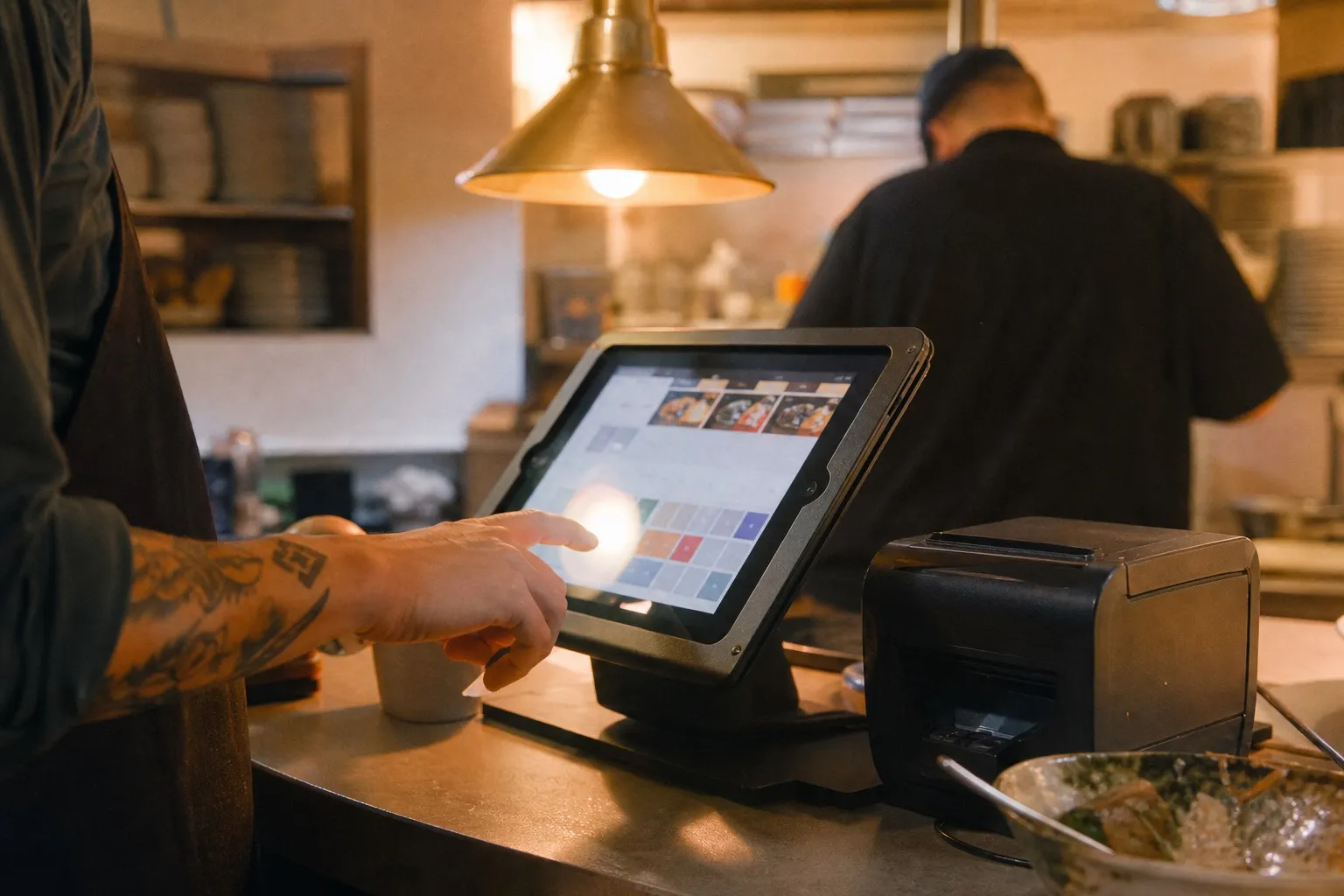
I spent Tuesday lunchtime in a Burger King off the M6 watching a self-order kiosk handle eleven of the next twelve orders without a single human keystroke. The twelfth was a man my dad’s age ordering a Whopper meal at the counter because, in his words, “the screen’s too much faff.” The store was clean, the line moved, the food came out in under four minutes. It was — and I mean this as a compliment in 2025 UK hospitality — completely unremarkable.
Hold that thought, because today BKUK Group dropped its full-year-2024 numbers, and on any normal reading they’re modest. £408.3 million in revenue, up 7%. Like-for-likes up 4.5% to £347 million. Underlying EBITDA of £26 million, up 12%. Thirteen new restaurants opened across a 574-site UK estate that’s now roughly half company-owned. CEO Alasdair Murdoch — per the Restaurant Online write-up this morning — called it a “solid performance,” which is the kind of phrase a CEO uses when the numbers are good but the room is bad. Flag the obvious: this is single-source on the financials today; I haven’t yet seen the filed accounts, so treat the underlying breakdown as preliminary until Companies House catches up.
But the contrarian reading is this: in a year where UKHospitality is forecasting six venue closures a day in 2026 and where TGI Fridays UK has changed hands twice in fifteen months, +7% revenue and +12% EBITDA from a 574-unit QSR estate is not “solid.” It is genuinely, structurally good news, and the market should call it what it is.
What +7% actually buys you in this year
Strip out the modesty. UK hospitality’s median operator did not grow 7% this year. Most of the independent base I cover — pubs, gastros, single-site restaurants — is flat to down on a like-for-like basis once you back out menu inflation. Burger King UK posting LFL +4.5% in real volume terms (more or less, depending on how you read the mix) puts them above water in a category where water has receded a long way.
The system-wide sales number is the one nobody is going to caption properly. BKUK’s system-wide sales surpassed $1 billion in 2024. That’s a threshold the brand crossed quietly while the rest of UK casual dining was being asked to model business-rates rises of £28,900 per hotel and £205,200 cumulative. The thirteen new restaurants are the tell: in a year where most operators are closing or holding, BKUK opened thirteen sites. Each one is a vote, with capex, that the unit economics still work at the QSR end of the market — at exactly the moment the same economics are breaking at the mid-market casual-dining end.
The split — roughly half the 574 estate company-owned, half franchised — also matters. A pure-franchise model would have BKUK reporting royalties and looking smaller; a pure company-op model would have them carrying the labour cost Murdoch is flagging on every gross-margin line. The hybrid is what lets you grow EBITDA 12% on revenue up 7%: company stores capture the operating leverage, franchisees absorb the marginal opening risk.
The Murdoch caveat is the whole story
This is the part the trade press will under-cover. Murdoch flagged labour cost pressure in the release. He had to. The Autumn 2024 Budget’s National Insurance and minimum-wage changes are now flowing through the 2025 P&L of every UK operator with a wage bill, and BKUK’s roughly half-company-owned estate is a wage bill of meaningful scale. The 12% EBITDA growth is what happens before the 2025 cost stack lands in full; the question every analyst should be asking on this release is how much of it survives into the FY25 numbers we’ll see next December.
My read is that the kiosk rollout — and the broader self-service tilt I watched in person on Tuesday — is the operational hedge. You don’t take 5–6 percentage points of in-store labour out of a QSR P&L by hiring better. You take it out by re-architecting the counter. BKUK has been doing that quietly for two years, and it’s the lever that lets a “solid performance” headline survive a brutal cost year.
The contrarian read on the whole release: this is what category-leadership in a contracting market looks like. Not double-digit revenue growth. Not splashy new-format announcements. Just thirteen new sites, a billion in system sales, and an EBITDA line that moved up while the rest of the high street moved sideways or down. In 2026, when the rates relief expires and the six-a-day forecast starts to actually land, +7% and +12% will look better in hindsight than it does on the wire today.
— Luca covers restaurants for TableTransfers. Tips: [email protected].
Featured
More
Browse all 494 posts
The Voice Agent Maturity Curve
mise
·12 min read
The Four Margins of a Restaurant
mise
·14 min read
The AI Premium in Hospitality M&A: Broker Story or Real Number?
the bottom line
·9 min read
What the DoorDash/SevenRooms Deal Actually Buys
the bottom line
·11 min read