DoorDash's $5B Six-Week Sprint Reframes Restaurant SaaS

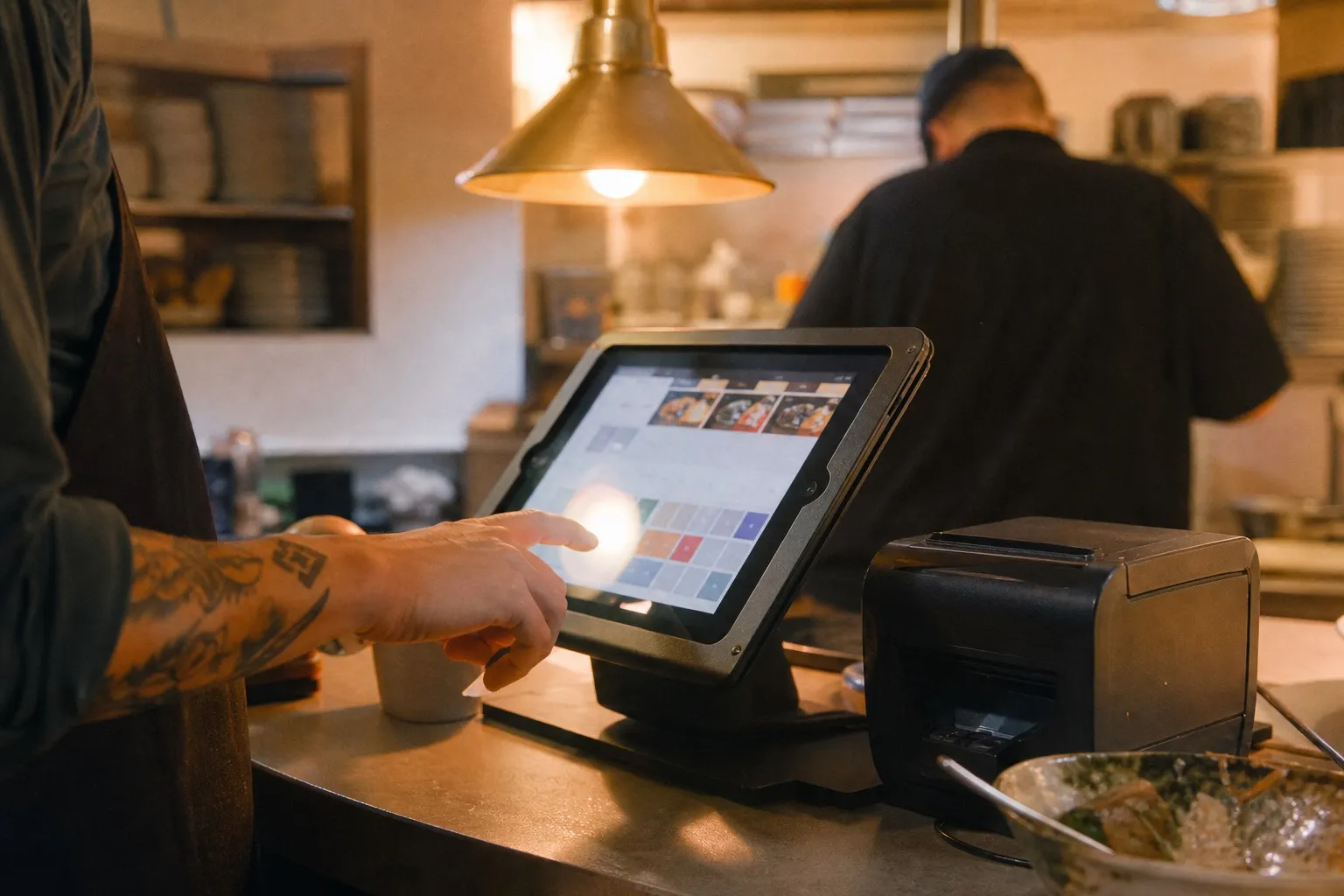
Read against earnings, the Deliveroo plus SevenRooms double — $3.724B and $1.152B in roughly one quarter — is DoorDash quietly declaring itself an operator-software company, not a marketplace.
I was standing at the pass of a 70-seat room in the Mission on the night of May 6, watching the chef call tickets, when my phone lit up with the SevenRooms headline. I stepped outside between courses, read the DoorDash investor announcement, and immediately did the math the IR copy was burying. In roughly six weeks DoorDash had committed close to $5 billion of acquisition-date fair value — and almost none of it was about getting more drivers on the road.
Here is the contrarian read. DoorDash is no longer a marketplace company pretending to build software on the side. As of the Q1 print, it is a restaurant operating-system company that happens to own the largest U.S. on-demand delivery network. The Deliveroo plus SevenRooms double — $3.724 billion plus $1.152 billion — is the structural declaration. June 13 is when it becomes legally true.
The number nobody is saying out loud
Pull the Q1 documents apart and the number that matters is the one the press release does not lead with. DoorDash disclosed $4.876 billion of combined acquisition-date fair value across the two deals — Deliveroo at $3.724 billion, SevenRooms at $1.152 billion. That figure sits in the 10-K/A as filed and gets repeated, almost in passing, in the SevenRooms operator-facing post on about.doordash.
For context: DoorDash’s Q1 revenue came in below the Street consensus on the same May 6 print where the SevenRooms deal was announced — CNBC framed it as a miss. Management absorbed a soft top-line tape and a $4.9 billion M&A bill in a single afternoon. That is not a marketplace operator nervously diversifying. That is a CFO who has already decided what kind of company he is running and is now buying the balance sheet to match.
SevenRooms closing on June 13 — nine days from now — is the part of the story that gets called “logo acquisition” by people who have never sat on the receiving end of a CRM rollout. It is not. SevenRooms is the reservation, CRM, marketing, and waitlist layer for a meaningful share of independent fine-dining and hotel F&B in the U.S., U.K., and Australia. It is the system of record for the guest. DoorDash is buying the guest record, not the booking widget.
What the operator actually sees
Stand on the floor of any room running SevenRooms today and the workflow is roughly this: the host taps a reservation, the system pulls allergies and previous spend, the manager gets a flagged note when a regular walks in, and the post-meal email goes out automatically. None of that touches DoorDash today. After June 13, all of it sits inside the same parent company that knows what that same guest ordered for delivery on a Tuesday night.
That is the asset. Not the SaaS ARR, not the seat count — the join. The single guest identity across on-premise and off-premise. Anyone who has tried to build that join from the operator side, with a stack of point integrations and a Zapier graveyard, knows what DoorDash just paid $1.152 billion to skip.
Deliveroo, closing October 2, is the harder argument. On the surface it is geographic — U.K., France, Italy, U.A.E., Hong Kong. But the deal price relative to Deliveroo’s standalone marketplace economics only pencils if you assume the same operator-software thesis travels. DoorDash is not paying a 4x premium on takeout GMV. It is paying for the ability to run the same combined commerce-plus-CRM playbook in markets where the on-premise software layer is more fragmented than it is in the U.S.
Mark interpretation
My read: the next twelve months at DoorDash will be defined less by basket size and more by attach rate. How many SevenRooms operators get a DoorDash Drive contract bundled into renewal. How many DoorDash merchants get cross-sold a SevenRooms host stand. How quickly the guest graph — the actual join — becomes a product surface a restaurateur can act on from a single screen.
If that attach rate moves, the multiple re-rates. DoorDash stops being valued as a delivery aggregator and starts being valued as a vertical SaaS company with a logistics moat attached. If it stalls — if SevenRooms quietly becomes a feature inside the DoorDash merchant portal and nothing more — the $4.876 billion looks like a defensive buy against Uber’s own software ambitions, and the operator-software thesis goes back in the drawer.
I covered the SevenRooms deal mechanics in a forthcoming May piece, and the parallel question of who controls the guest record — Resy and Amex, in that case — sits in an upcoming spring piece. The throughline across all three is the same: in 2025, the asset is the guest identity, and the companies willing to pay marketplace-scale prices for SaaS-scale revenue are the ones that figured that out first.
What I would watch on June 13
Three things, in order. First, whether DoorDash files an 8-K with any incremental disclosure on integration scope — particularly any language about a unified merchant identity layer. Second, whether SevenRooms’ existing roadmap items, especially around payments and POS integrations, get reprioritized or paused. Third, whether the DoorDash merchant portal starts surfacing reservation data in the same view as delivery orders within ninety days of close. Any of those three confirms the thesis. All three confirms it loudly.
The marketplace era of DoorDash ends on June 13. The operator-software era starts the same morning. The earnings call after that one is going to read very differently than the last one did.
— Samuel hosts the Service podcast for TableTransfers. Tips: [email protected].
Featured
More
Browse all 494 posts
The Voice Agent Maturity Curve
mise
·12 min read
The Four Margins of a Restaurant
mise
·14 min read
The AI Premium in Hospitality M&A: Broker Story or Real Number?
the bottom line
·9 min read
What the DoorDash/SevenRooms Deal Actually Buys
the bottom line
·11 min read