Lunchbox Throws Free Middleware at the Third-Party Delivery Aggregation Problem

Lunchbox's RLC announcement of free order-aggregation middleware is a competitive shot at Otter, Checkmate, and Cuboh — and a signal that aggregation has been commoditized to the point of being a marketing channel.
The Lunchbox booth at JW Marriott Phoenix Desert Ridge had the kind of energy you only see on the closing day of a conference when somebody decides to blow up the pricing model on their way out the door. I’d come over because three operators in a row had told me, in the hallway, that Lunchbox was giving away the part of the stack their current vendor was charging them four figures a month for. By the time I got to the demo screen, the rep was already mid-pitch to a multi-unit operator from Texas, and the slide behind him said the quiet part out loud: free.
Restaurant Leadership Conference 2025 closes today, and the Restaurant Technology News recap of the week confirms what the floor was already buzzing about: Lunchbox is shipping free order-aggregation middleware. The contrarian read — the one I want to plant before anybody else gets there — is that this isn’t a product launch. It’s a marketing channel launch. Aggregation, as a standalone business, just got commoditized in front of a room full of buyers.
What Lunchbox is shipping for free
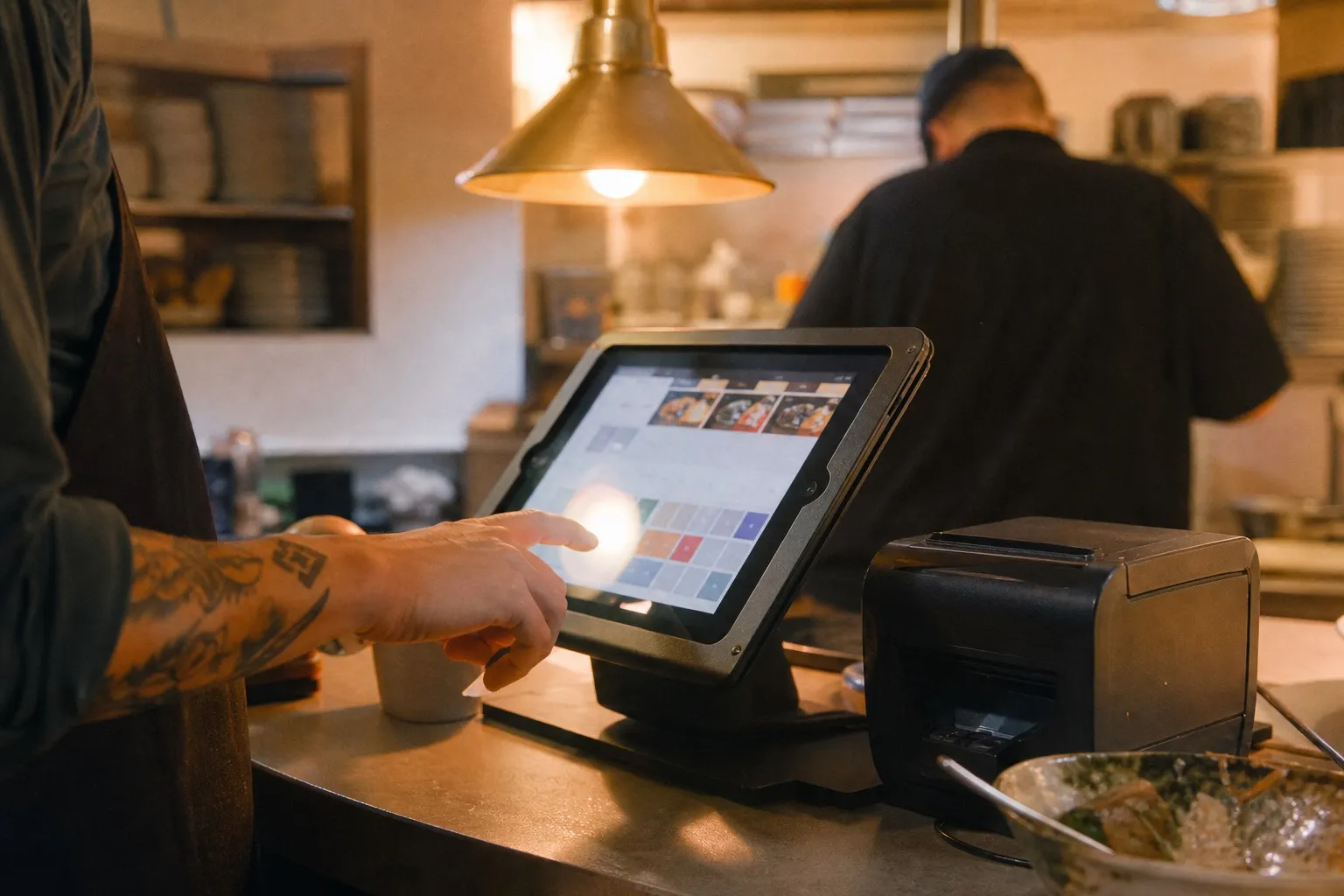
The pitch is straightforward: pipe your DoorDash, Uber Eats, and Grubhub tickets into one consolidated stream that lands in your POS and your kitchen, without a separate per-location subscription. That’s the territory Otter, Checkmate, and Cuboh have owned for years — the boring, load-bearing middleware that keeps a tablet farm from devolving into a tablet graveyard during a Friday rush.
Lunchbox already sells direct-ordering websites, apps, and a guest-engagement layer. Bundling aggregation into that stack — at zero incremental cost — is the move you make when you’ve decided the connectivity itself isn’t where the margin is. The margin is in everything that sits on top: the order data, the guest profile, the reorder prompt, the upsell.
I’m being deliberate here about what I don’t know. The recap doesn’t break out which POS integrations are live on day one, doesn’t quote a customer count, and doesn’t spell out the contract terms or any usage caps that might quietly bound “free.” If you’re an operator reading this, those are the three questions to ask before you rip out an incumbent. But the strategic posture is unambiguous, and the strategic posture is what matters for the rest of the category.
Why Otter and Checkmate just got compressed
When middleware is free from a credible competitor, the incumbents have exactly two places to retreat: service and analytics. That’s it. Connectivity stops being a differentiator the moment a buyer in a hallway can say “Lunchbox does that for nothing.”
Otter has the broader integration footprint and a more mature analytics layer, so it has room to retreat into “yes, but our reporting earns its keep.” Checkmate has historically leaned into hospitality-grade support and white-glove onboarding, which is a real moat — until the CFO does the math on a fifty-unit chain and asks why support costs more than the software it’s wrapping. Cuboh sits in the most exposed position; it’s the one whose pitch was most squarely aggregation-as-a-product.
None of these companies are going to evaporate. But every one of them now has a harder conversation with procurement next quarter, and the conversation isn’t about features. It’s about why the line item exists at all.
What this means for the operator’s stack
The honest operator takeaway: free middleware is a real budget unlock, but it’s not free in the way the slide says. You’re trading a vendor relationship for a deeper dependency on Lunchbox’s roadmap, their integration coverage, and their willingness to keep the lights on for a feature they’re not charging for. That trade can absolutely be the right one. Just price it correctly.
The bigger pattern — and this is what I’ll keep tracking through the back half of the year — is the slow collapse of POS-adjacent middleware into the larger guest-data and direct-ordering platforms, as we cover in a later piece on POS-adjacent middleware. When the plumbing becomes free, the floor plan changes. RLC just gave us the first clean look at what that floor plan is going to look like.
— Maya covers restaurant tech. Tips: [email protected].
Featured
More
Browse all 494 posts
The Voice Agent Maturity Curve
mise
·12 min read
The Four Margins of a Restaurant
mise
·14 min read
The AI Premium in Hospitality M&A: Broker Story or Real Number?
the bottom line
·9 min read
What the DoorDash/SevenRooms Deal Actually Buys
the bottom line
·11 min read