NRF Day Three: The Foodservice Innovation Zone Grew Up
Day 3 wrap from NRF. The Foodservice Innovation Zone's Pit Stop activation and the drive-thru/kiosk/delivery integration demos point to operators wanting unified stacks over best-of-breed.
Wednesday afternoon, Javits Center, and I am standing at the Foodservice Innovation Zone holding a paper cone of something that wants to be a churro. Behind me, the Pit Stop activation is doing the thing it was designed to do: pulling operators off the main concourse, sitting them down, and walking them through a drive-thru-to-kiosk-to-delivery handoff like a tasting menu. Three days into NRF 2025 and the dispatch from the floor is clearer than it has any right to be.
The operators are not buying features. They are buying integration. That is the whole show, and once you see it you cannot unsee it.
The Pit Stop did the heavy lifting
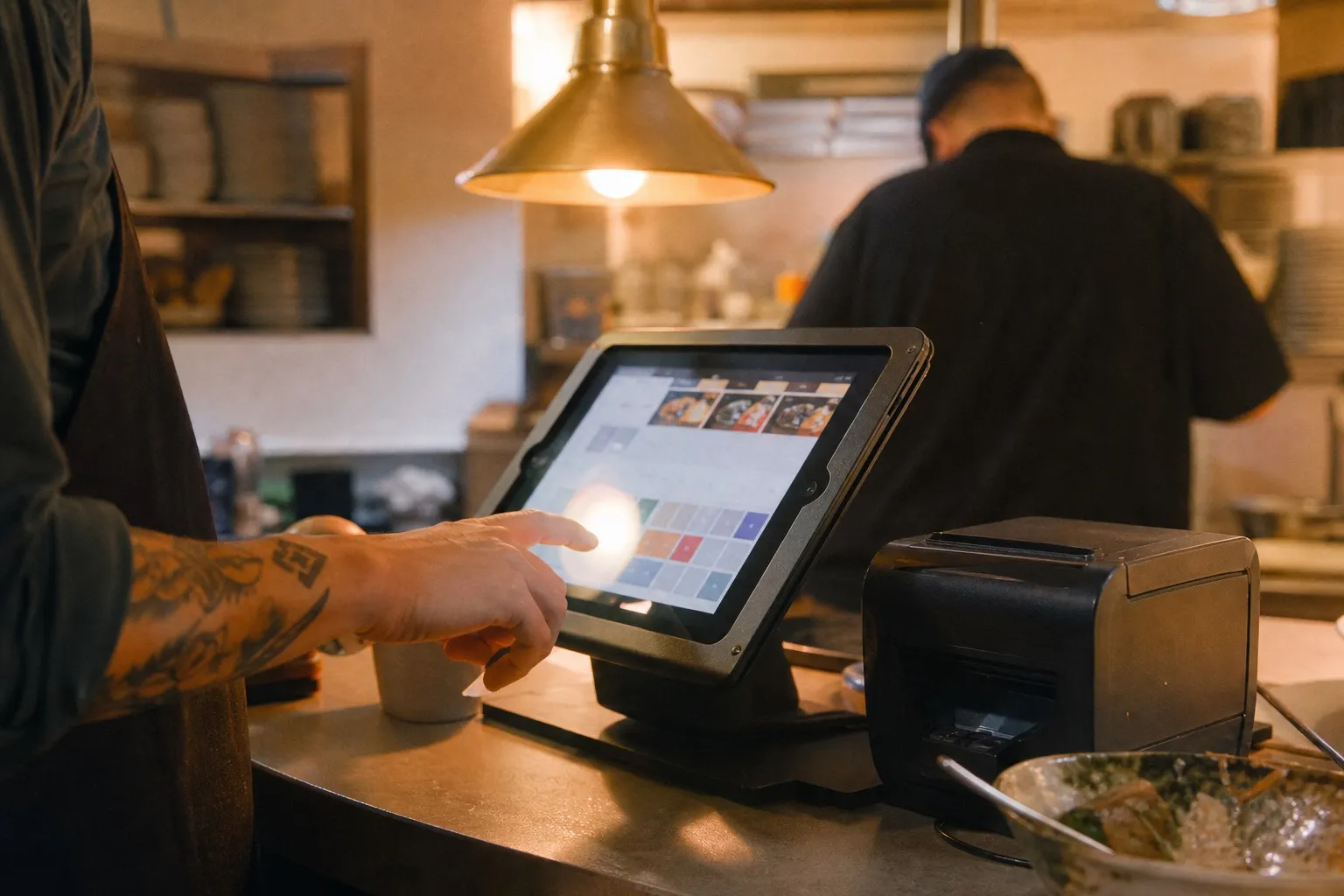
I want to be honest about what the Pit Stop activation actually was, because the NRF preview coverage undersold it. It was not a vendor booth. It was a staged restaurant — drive-thru lane, self-order kiosks, a delivery handoff shelf, a POS, a KDS, an AI voice agent at the speaker post — and the demo was the data moving cleanly across all of it. A guest orders at the kiosk, modifies in the app, picks up at the drive-thru, and the ticket lives in one place. No swivel-chair. No duct tape.
I watched a multi-unit ops director from a regional QSR — maybe forty units, maybe sixty — stand in front of the handoff station for a full minute and not say anything. Then he turned to his colleague and said, quietly, “We have six vendors doing this and they still don’t talk.” That is the quote of the show. I have been hearing variations of it in the hallway for two days.
The BizTech preview framed NRF 2025 as the year unified commerce would graduate from concept to product, and at least on the foodservice side of the hall, that framing held up. The Innovation Zone is not showing you what is possible. It is showing you what is shippable, this quarter, if you are willing to consolidate your stack.
Best-of-breed is a 2022 sentence
Here is the contrarian piece, and I will say it plainly: the best-of-breed era in restaurant tech is closing. Not dead, not gone, but closing. For five years the pitch was that you assemble the elite POS, the elite KDS, the elite loyalty engine, the elite delivery aggregator, the elite labor tool, and you bolt them together with middleware and willpower. That worked when margins were forgiving and labor was cheap. Neither of those things is true in January 2025.
What I heard at the Pit Stop, over and over, was a different ask. Operators want one throat to choke. They want a roadmap they can predict. They want the AI features — the voice ordering, the dynamic upsell, the AI metatagging from Velou that was running on a screen near the menu-engineering demo — to be features of a platform, not a separate procurement cycle. Velou’s metatagging is genuinely clever; it was also being shown inside three different stacks on the floor, which is the tell. The interesting AI capabilities are going to be table stakes inside platforms by Q3. They are not going to be standalone wedges for much longer.
This is, of course, exactly the integration argument in a later Vibe Check we publish, and the thread continues as our subsequent coverage argues. I am not pretending it is a novel observation. I am saying the operators are now ahead of it, and the buy-side conversation at NRF this week sounded different from NRF last January.
What the Day 3 floor was actually selling
Walk the Innovation Zone with fresh eyes and you can see three product shapes emerging. First, the all-in-one platforms that used to be POS companies and are now adding kiosk, voice AI, KDS, and delivery dispatch as native modules. Second, the orchestration layers that have given up on being the system of record and are repositioning as the connective tissue — fewer of these than last year, which is itself a signal. Third, the AI specialists who are either being absorbed into platforms or are pricing themselves to be absorbed.
The Pit Stop sat in the middle of all that on purpose. It was a physical argument for shape one. Whether you buy the argument depends on your scar tissue, but the operators I talked to on Day 3 were buying it. The forty-unit director I mentioned earlier told me he is consolidating from six vendors to two in 2025 and the only debate is which two. He did not mention a single feature by name. He talked about contracts, support response times, and whether his GMs would have to learn one interface or four.
That is not a tech conversation. That is an operations conversation. And NRF, on Day 3, was finally having it.
Inauguration is Monday. The Foodservice Innovation Zone breaks down tonight. I am eating something else from a paper cone and I am thinking about what consolidation actually costs the operators who get the second-best platform in their segment. That is a piece for another week.
— Samuel hosts the Service podcast and files occasional Pass pieces from the road. Tips: [email protected].
Featured
More
Browse all 494 posts
The Voice Agent Maturity Curve
mise
·12 min read
The Four Margins of a Restaurant
mise
·14 min read
The AI Premium in Hospitality M&A: Broker Story or Real Number?
the bottom line
·9 min read
What the DoorDash/SevenRooms Deal Actually Buys
the bottom line
·11 min read