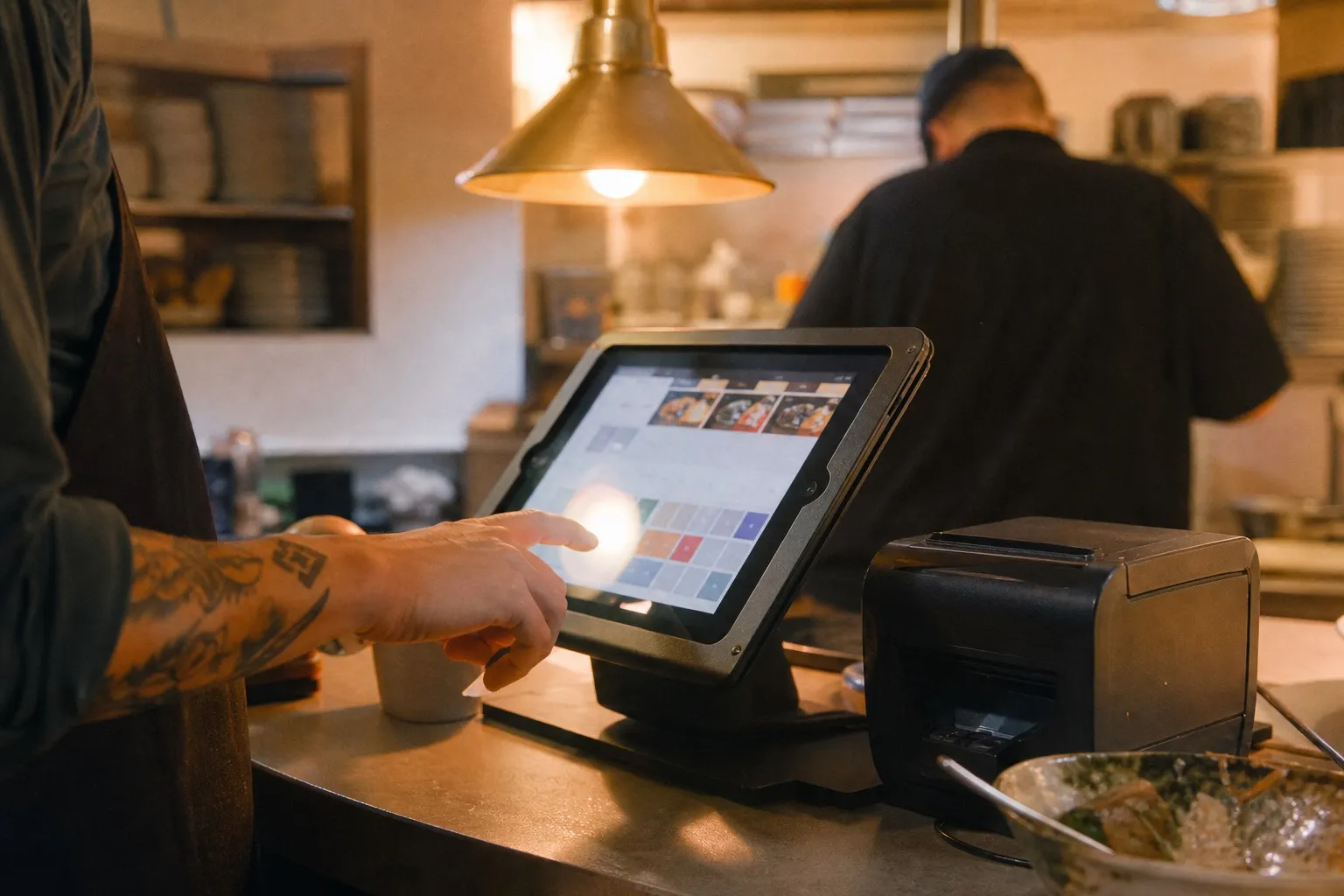
Olo Heads to UBS — The Case for Digital Ordering as Critical Infrastructure

Olo's UBS Conference presentation next week positions the FreedomPay tie-up and Olo Pay's <2% penetration of $160B GMV as the bull thesis the public market is missing.
The coffee is still too hot when I open the UBS agenda on my laptop. March 12, 9:00 AM ET, midtown — Olo presenting at the UBS Global Consumer and Retail Conference. I’ve watched a dozen of these slots and most are forgettable: a CFO, a deck, a fireside, a few buy-side analysts asking about cohort retention. Next week’s slot for Olo is different, and the reason has almost nothing to do with the OLO ticker.
It has to do with the line in their Q4 deck that says card-present GPV opportunity is greater than $100 billion. That’s the number that should be driving the multiple — and isn’t.
The contrarian read on next Wednesday
Most sell-side notes I’ve read this week frame the UBS presentation as a chance for Olo to reassure the market after a noisy quarter — explain the FreedomPay relationship, defend the take-rate trajectory, talk enterprise wins. Reassurance is the wrong frame.
The right frame: Olo is walking into UBS with the receipts to argue it is no longer a digital-ordering vendor. It’s a payments-and-data infrastructure company that happens to have 88,000 active locations already plugged into the rails, and a card-present GPV opportunity north of $100B sitting one integration away.
Q4 FY24 print: revenue $76.1M, up 21%; GMV $29B; GPV $2.8B. The GMV/GPV ratio is the tell. Olo Pay processed less than 2% of the GMV running across its own ordering platform last year. That’s not a maturity problem — it’s a distribution problem with the floor still in front of it.
My read: the bull case for the next twelve months isn’t that Olo grows ordering revenue 20%. It’s that the GPV line goes from $2.8B to something with a different first digit, because the card-present channel finally comes online and the existing 88,000-location footprint becomes the cheapest payment-processor acquisition channel in the industry.
Why FreedomPay is the lock-pick
The FreedomPay partnership announced at the Feb 25 print is being read by most analysts as a routing deal. It is more than that. FreedomPay’s gateway is already embedded in enterprise hospitality and large-format restaurant operators — the exact segment Olo has had the hardest time cracking on payments, because those operators already have processor relationships they won’t rip and replace for the digital channel alone.
What FreedomPay gives Olo is the in-store rail. Olo can now pitch a 500-unit operator on a unified card-present + card-not-present payments stack without forcing a processor swap on the in-store side. That’s the gate holding Olo Pay’s enterprise penetration below 2%, and the deal removes it.
The math is what should be on the UBS slide and probably won’t be. Olo’s restaurant customers process roughly $160B in GMV across digital and physical channels combined. Olo Pay attaches to less than 2% today. Pull penetration to 10% — still a fraction of what Toast does inside its own base — and the GPV line goes up by an order of magnitude. Take-rate is the multiplier on top.
The “critical infrastructure” framing
There is a separate strand of the bull case that the Restaurant Business piece on Olo’s odyssey since going private gestures at without quite naming. Olo has become infrastructure that operators don’t switch off of. Eighty-eight thousand active locations with the ordering, dispatch, and loyalty pipes wired in is the kind of footprint that compounds in the direction of platform pricing power, not vendor commoditization.
The reason that framing matters next Wednesday is the audience. The UBS Global Consumer and Retail Conference is not a tech-sector room. It’s a consumer-coverage room — restaurant analysts, hospitality REITs, packaged-goods generalists. Olo’s job at UBS is to translate the platform story into the language those analysts already speak about Visa and Mastercard and Toast: rails, GPV, take-rate, attach motion. If the CFO does that well, the multiple compression of the last six months reverses faster than most people expect.
My read: the FreedomPay tie-up is doing more lifting than the press release suggested, the <2% Olo Pay penetration is the chart that should be on slide three, and card-present GPV is the line the public market is mis-pricing right now. A later piece on the loyalty/payments stack will go deeper on attach mechanics; our later coverage of restaurant-tech M&A will pick up the strategic-buyer angle if the multiple stays where it is.
For now: watch Wednesday’s 9 AM slot. The deck will tell you whether Olo intends to lean into the infrastructure frame or hide behind the ordering frame for one more quarter. I have a guess about which one.
The coffee finally cools. I close the agenda tab and open the model.
— Maya covers restaurant tech. Tips: [email protected].
Featured
More
Browse all 494 posts
The Voice Agent Maturity Curve
mise
·12 min read
The Four Margins of a Restaurant
mise
·14 min read
The AI Premium in Hospitality M&A: Broker Story or Real Number?
the bottom line
·9 min read
What the DoorDash/SevenRooms Deal Actually Buys
the bottom line
·11 min read