SevenRooms Quietly Rebrands. Watch the Hotel F&B Footprint.
Allison Page's January brand refresh signals a B2B SaaS maturation. The hotel F&B install base — Marriott, MGM, Mandarin, Wynn, Jumeirah — is the underappreciated asset the rebrand is built on.
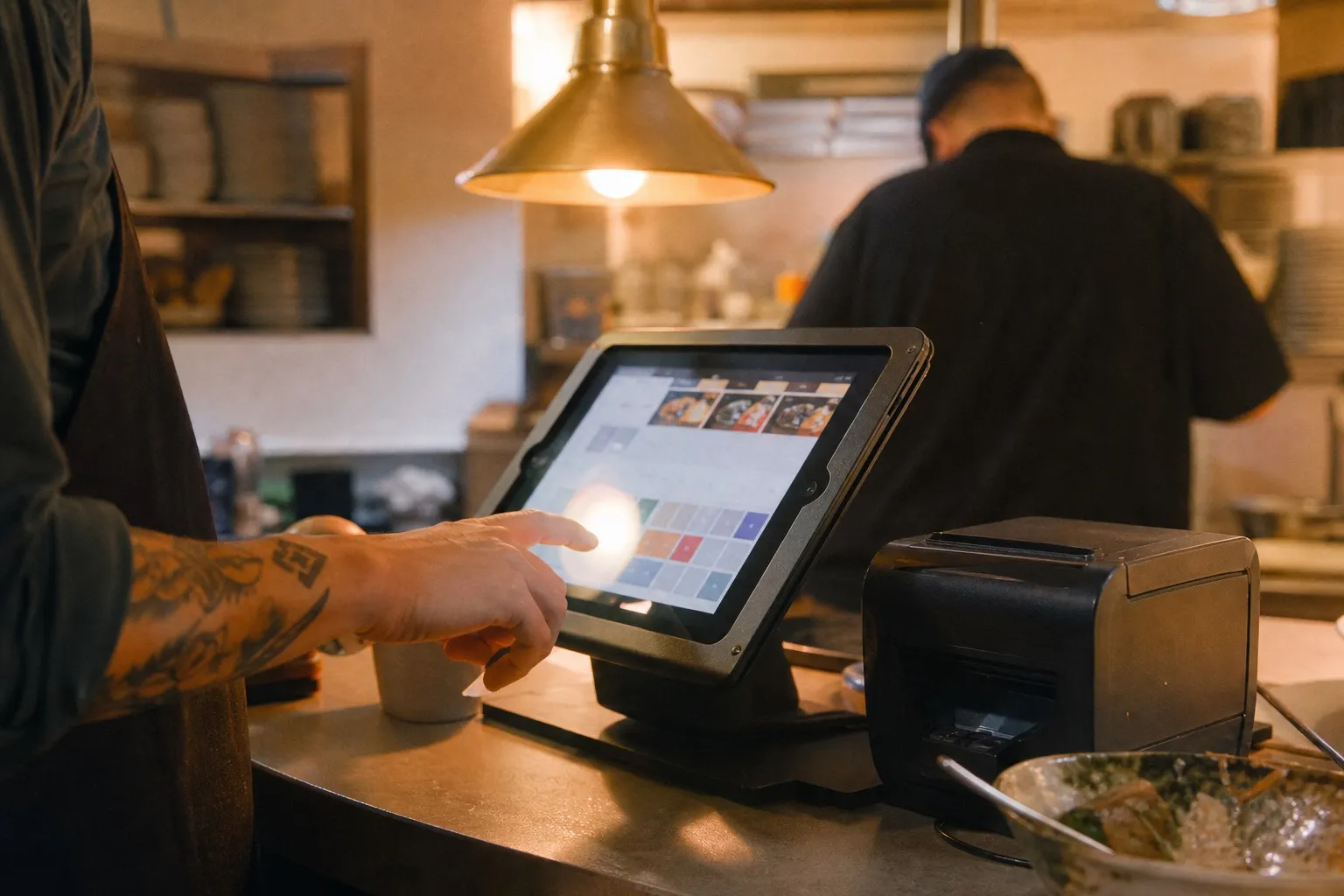
I caught the rebrand in the wild before I caught the press release. Tuesday night, I was tucked into a banquette at a Mandarin Oriental property doing what I do — watching the host stand, timing the turn, eavesdropping on a four-top’s wine order — when the manager flipped her tablet toward me to show a guest profile. New wordmark. New color. Same software. “Did you see they redid it?” she asked, like we were talking about a friend who got a haircut. I had not seen. I went home, pulled up sevenrooms.com/blog/2025-brand-refresh, and there it was: a January 2025 brand refresh from Allison Page’s team, quietly dropped, with a tone that read less “consumer hospitality startup” and more “enterprise SaaS for the people who run rooms.”
That tonal shift is the story. Not the new logo. The hotel F&B footprint underneath it.
The moat nobody talks about is in the lobby restaurant
Here is the contrarian take I want to plant before anyone reads this as a routine vendor-news post: SevenRooms’ real defensibility is not its independent-restaurant base. It is the in-house dining programs at the big flags. Marriott. MGM. Mandarin Oriental. Wynn. Jumeirah. Walk into a luxury hotel with a serious F&B program and there is a non-trivial chance the host stand is running on the same CRM the bar two floors up is running on, and the room-service order capture is being reconciled against the same guest record. That is not a thing OpenTable or Resy is built to do. It is barely a thing the PMS vendors are built to do. It is a thing SevenRooms quietly became the default for while the trade press was busy covering restaurant-week features.
My read: the rebrand is what happens when a company’s product surface area has outgrown its founder-era identity. You do not redo your wordmark to win another bistro in Brooklyn. You redo it because the buyer on the other end of the deal is now a VP of F&B at a global flag, and that buyer needs the logo on the slide to not look like a 2017 Series B deck. The press page shows the trajectory plainly: the customer logos got bigger every year, and the language got more operator and less consumer.
What 2,000 to 13,000 venues actually bought
The PSG investment retrospective is the receipt. When PSG took its minority stake in 2020 — see psgequity.com/news/psg-completes-sale-of-minority-stake-in-sevenrooms-to-doordash for the historic note on that investment — SevenRooms was around 2,000 venues. The company is now north of 13,000. That is the kind of compounding that happens when each enterprise logo brings a portfolio of sub-properties with it. One Marriott flag deal is not one venue. It is dozens. One Wynn relationship is not one restaurant. It is every outlet, every bar, every pool deck, every in-room order surface that touches a guest profile.
This is the part I think is most chronically underpriced by people writing about hospitality software. A SaaS company with 13,000 venues sounds like a mid-cap restaurant-tech story. A SaaS company that is the default guest-data layer for five of the world’s most demanding hotel groups is a different story. The unit of analysis is wrong. The right unit is “how many of the world’s top 100 hotel F&B programs run on this,” and on that number, SevenRooms is alone at the top of the pile.
My read: the brand refresh is positioning for the next conversation, not the last one. It is a tell that the company believes the enterprise hotel motion is the dominant motion now, and is dressing accordingly.
What I’d be watching from the operator seat
If I am a director of F&B at a competing flag right now, I am asking three questions, and none of them are about the logo. First: where does my current CRM stop and my PMS start, and who owns the dirty middle? Second: when my GM walks me through guest-recognition at the host stand, is that data actually flowing back to the suite manager, or are we just pretending? Third: when SevenRooms talks about hotel — and they are increasingly talking about hotel first — am I evaluating that against the platform’s actual hotel install base, or against a generic restaurant-tech RFP my procurement team pulled off a shelf?
There is a wider hotel-tech stack question lurking here that I do not have room to litigate in one post — in a later piece we publish on hotel-tech stacks I want to draw the full plumbing diagram, and as our subsequent coverage of Marriott AI argues, the guest-data layer is where the leverage compounds. For now: take the rebrand seriously. Not because the new typeface is meaningful. Because the company that did the rebrand has, very quietly, become the system of record for some of the most lucrative dining rooms on the planet, and is now talking like it knows.
My read: in 18 months we will all be writing about SevenRooms differently, and the people who already adjusted — the operators who saw the manager flip the tablet — will not be surprised.
— Naomi covers hotel F&B and operations. Tips: [email protected].
Featured
More
Browse all 494 posts
The Voice Agent Maturity Curve
mise
·12 min read
The Four Margins of a Restaurant
mise
·14 min read
The AI Premium in Hospitality M&A: Broker Story or Real Number?
the bottom line
·9 min read
What the DoorDash/SevenRooms Deal Actually Buys
the bottom line
·11 min read