Toast's Marketing Stack vs. Resy's Loyalty Rails: Same Operator, Two Pitches

Two product pitches landed in my inbox in the same week — Toast's bundled marketing-and-discovery layer and Amex's Resy-led loyalty stack. They point at the same operator and the same cover. The choice underneath is structural, not feature-by-feature.
Two pitches landed in my inbox this week, eighteen hours apart, aimed at the same operator. Tuesday: a Toast field rep walking me through what the platform is calling its growth layer — ToastIQ-powered Advertising, Toast Local discovery, a marketing services bench, all wrapped in a single quota line. Wednesday: an Amex partner manager pitching the Resy side’s operator stack — Platinum Nights inventory, the dining-credit demand pool, the Resy guestbook feeding the rest of the membership graph.
Same operator. Same cover. Different theory of where the next reservation comes from.
The trade is going to cover these as parallel announcements. I think they collide. (That framing is mine — call it the interpretation flag.)
Pitch one: the Toast read
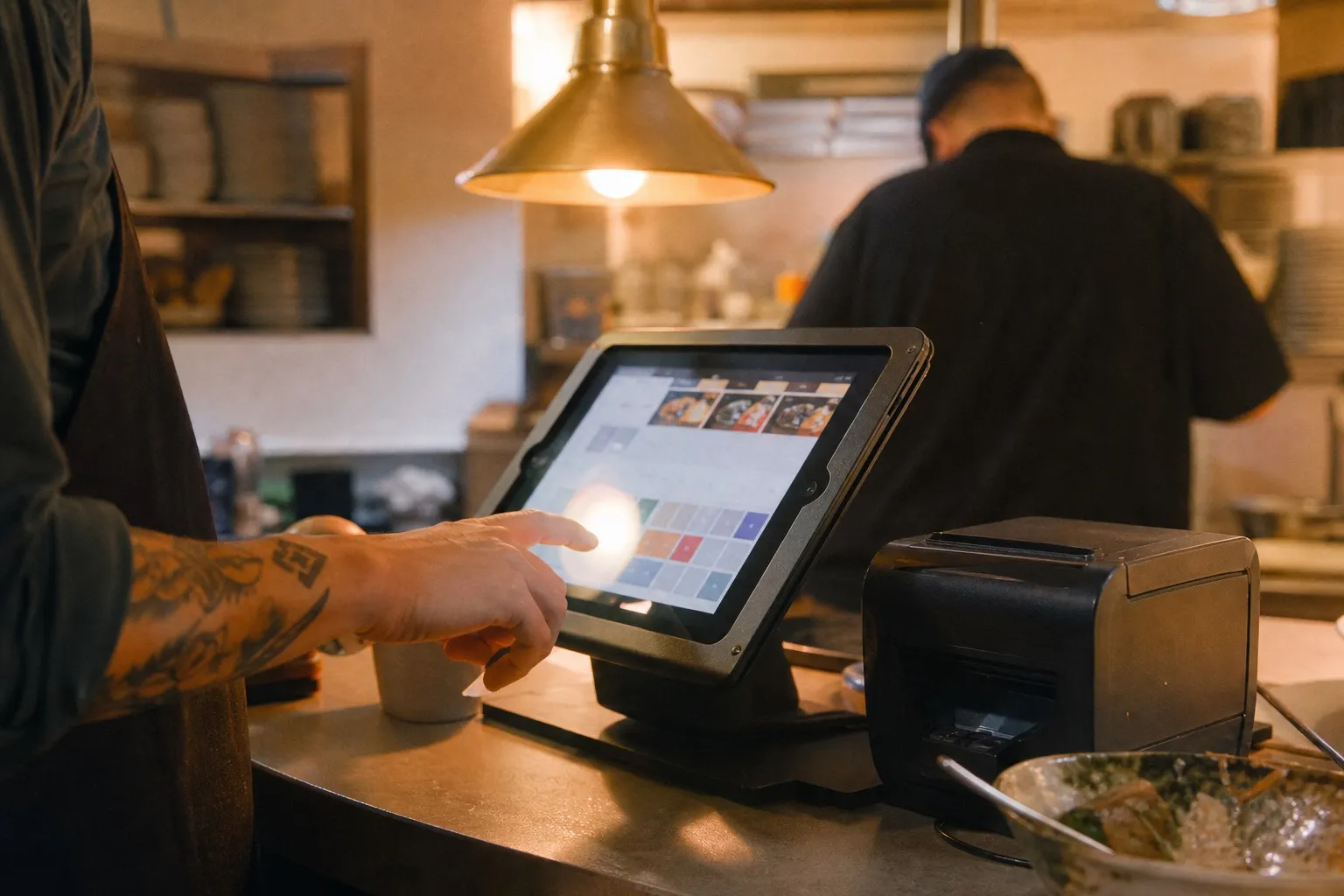
Strip the deck and the Toast pitch is a bundle. The product surface keeps growing — Advertising powered by ToastIQ, Toast Local as a discovery surface, the email tools, the Loyalty SKU — and the rep’s job in January is to argue the bundle is cheaper than the parts. The agentic layer underneath is the ToastIQ assistant that went GA in October — the one that drafts the campaign, picks the segment, and pushes the send from inside the back office.
What changed in Q4 is the discovery side. Per the Aug. 5, 2025 partnership Toast and American Express announced, Resy and Tock listings now surface inside the Local by Toast app alongside Toast Tables — the diner-facing app a Toast restaurant gets for free starts pulling inventory from more than 25,000 Amex-managed venues. The same partnership pushes Resy/Tock guestbook data into Toast’s Digital Chits, so a server on a handheld sees a regular’s wine notes and birthday flag mid-service. Rollout language is “anticipated to start rolling out in 2026” — corporate for some of it ships, some slips.
The Toast pitch sells discovery + activation + measurement off a data layer the operator already pays for. If you’re on Toast, the marketing stack does not ask you to re-platform.
Pitch two: the Resy read
The Amex pitch points at a different gravity well. Pablo Rivero’s CEO letter on the Resy/Tock unification names a stack that “links AI-powered discovery and booking, table and guestbook management, content and curation, ticketing and transactions, check-level point of sale data, and American Express membership.” That is the language of an operating system. The operator hook is the demand pool sitting on top.
The numbers Amex put in market in 2025 are the ones to underline. Dining is roughly $100 billion in annual card spend, per Amex disclosures. The Resy dining credit on Platinum sits at $400 a year. Platinum Nights — dedicated reservation windows at marquee rooms — has been rolling out a 2026 lineup since November. The Resy pitch is not “we will help you market.” It is we are the wallet your covers pay with, and we will route them to you. The Amex-as-dining-OS read is the right frame for what the partner manager is actually selling.
Where the stacks collide
The collision is structural, and it is the part nobody is naming out loud in January.
Both pitches want the operator’s marketing budget. Both want the guestbook. Both want to own the attribution — to be the system of record for why this cover walked in. Toast has the POS-data advantage: the check is on its rails, so post-visit measurement is clean. Amex has the loyalty-rails advantage: the cover walks in with a Platinum card earning $400 in dining credit, so the acquisition story is clean.
The Aug 5 partnership splits the difference on paper. In practice, the operator still has to pick one of two questions first:
- “How do I get a stranger to book me tonight?” → Toast’s discovery + activation surface is the closer pitch. The Local app, the email tool, the ads measured against Toast checks.
- “How do I get my best ten percent of covers to come back twice as often?” → Resy’s loyalty-rails pitch is the closer pitch. The Platinum demand pool, the dining credit, the guestbook talking to Amex membership.
Those are not the same job. The bundles on each side encourage the operator to pretend they are.
What an operator actually picks
The honest read after three weeks of operator calls:
Independent, full-service, $$$. Resy-led, with Toast as the POS underneath. The Platinum demand pool and Tock-inherited prepaid mechanics do work the Toast marketing layer cannot replicate. Verify the check-data flow into Resy in writing with both vendors.
Multi-unit, fast-casual or counter-service, $-$$. Toast-led, hard. The Local app and the ToastIQ ads are pointed at exactly this operator; Amex’s loyalty rails don’t price in well against $14 average checks. Pay for the Toast bundle, skip the Resy marketing add-on.
Multi-unit, full-service, $$-$$$. This is where the collision bites. Both vendors will pitch the same operator-month. Do not buy both marketing stacks. Pick the side whose attribution model you trust; use the other as the rail underneath.
What I’m watching
Whether Toast names a price-and-quota line for the bundled marketing stack on the Q4 2025 earnings call next month. The product pieces are shipping; the SKU framing is what tells you whether Toast wants this as retention or as an upsell. I’d weight the latter.
And whether Amex prices a Resy operator product distinct from card-member benefits in 2026. Right now the operator-side pitch is mostly inventory-and-demand. A real marketing SKU would change the collision math.
The bundle on each side is the easy story. The choice underneath is the operator one. Two pitches, one cover, and only one of them is the one your concept actually needs.
— Maya covers restaurant tech for The Pass. Tips: [email protected].
Featured
More
Browse all 494 posts
The Voice Agent Maturity Curve
mise
·12 min read
The Four Margins of a Restaurant
mise
·14 min read
The AI Premium in Hospitality M&A: Broker Story or Real Number?
the bottom line
·9 min read
What the DoorDash/SevenRooms Deal Actually Buys
the bottom line
·11 min read