Mews Lands $75M From Tiger Global — and a Vote of Confidence for Hotel PMS

Tiger Global led a $75M Series D in Mews today, signaling PMS-as-control-layer is the prevailing hotel-tech investor thesis. Mews grew >50% in 2024 and processed >$10B in payments.
I was an hour into lunch at a thirty-key boutique in the Marais — the kind of place that pours a 2019 Chinon by the glass and stages charcuterie on a slab of slate — when the press release dropped. The general manager checked her phone and said, in the unaffected way only Parisian hoteliers manage, “Tiens. Mews got Tiger money.” She onboarded the property to Mews two summers ago. Her front desk runs on it. Her F&B POS is wired into it. Her revenue manager opens it before email.
She wasn’t surprised. I wasn’t either. But the size of the check — $75M Series D led by Tiger Global, with Kinnevik, Battery, and Goldman Sachs AMGE rolling in alongside — is the kind of number that ends an argument I’ve been having with hotel-tech founders for two years.
The argument: where does the control layer live in a modern hotel stack? The RMS that prices the rooms? The channel manager that distributes them? The CRM that owns the guest? The AI agent answering WhatsApp at 2 a.m.?
My read, after today: none of the above. It’s the PMS. And every adjacent category — RMS, channel manager, guest messaging, even loyalty — is collapsing inward toward the PMS like a soufflé carried through a swinging door. Tiger Global just wrote the cheque that confirms the collapse.
The Tiger thesis, in plain English
Let’s stipulate the facts, because they matter. Mews grew more than 50% year-over-year in 2024, processed more than $10B in payments through its platform, and generated more than $200M in revenue. Total raised to date now sits at $410M. The new capital is earmarked for U.S. and DACH expansion and a deeper push into AI-driven revenue management — the latter a tell, given Mews already acquired Atomize to slot AI pricing into the core product.
Tiger doesn’t write growth checks because PMS is fashionable. The hotel PMS market is a Sisyphean replacement cycle. Legacy incumbents — Opera, Protel, Cloudbeds at the lower end — have been entrenched for decades. Properties hate switching. Onboarding takes months. The TAM looks fine but not breathtaking once you net out the chains that will never leave their corporate stack.
So what does Tiger see? My read: the PMS is the only system in the hotel that touches inventory, pricing, the guest profile, the payment rail, and increasingly the operational graph — housekeeping, F&B, spa. Every other category is a feature of that graph. Mews has built the graph and is now eating the features.
What “control layer” actually means
Let me define it the way a chef de cuisine would define mise en place: the control layer is where irreversible decisions happen. In a kitchen, that’s the pass. In a hotel, that’s the PMS.
Three things make a system the control layer:
- It owns the inventory of record. Rooms, rates, restrictions. If two systems disagree about whether room 412 is available tonight, the winner is the control layer. In modern hotel stacks, that’s the PMS.
- It owns the payment relationship. $10B processed isn’t a side hustle. It means the PMS is the system of record for money in and out — including the F&B check posted to the room. Every adjacent vendor is a guest at Mews’s table.
- It owns the guest object. Single source of truth for who the guest is, what they paid, what they ate, what they booked next. Without it, an AI concierge or loyalty program is a thin client over someone else’s database.
Once a system owns those three, the pull on adjacent categories is one-directional. Revenue management used to be a standalone SKU you bought from Duetto or IDeaS; Mews owning Atomize tells you where that’s going. Channel managers used to be connective tissue; the tissue is now being absorbed by the organ on either side. Guest messaging is next.
The U.S. expansion problem
The piece of the announcement I’d push on is the U.S. push. Europe is Mews’s home court — boutique groups, independent collections, the operator who reads a Skift longread on Sunday and migrates the PMS by Q3. The U.S. mid-market is a different beast: more chain affiliation, more revenue-management orthodoxy, more legacy Opera installs stitched into corporate systems Mews can’t replace in one quarter.
Tiger’s $75M doesn’t solve that by itself. What it buys is the sales motion — field organization, integration partners, brand-side conversations — plus M&A optionality. If you want to know whether Mews is serious about North America, watch whether they buy a U.S.-native RMS, channel manager, or guest-experience platform. My bet is at least one, and that it’s revenue management, not messaging — owning the AI pricing layer is the second leg of the control-layer stool after payments.
My read for hotel operators
If you’re running a property today, the Mews round changes one thing: the cost of betting on a non-PMS-native vendor for an adjacent function — RMS, CRM, messaging — just went up. Not because those vendors are worse, but because the gravitational pull of the PMS layer will keep pulling features inside it, and the integrations you rely on today are the ones most likely to deprecate or get acquired.
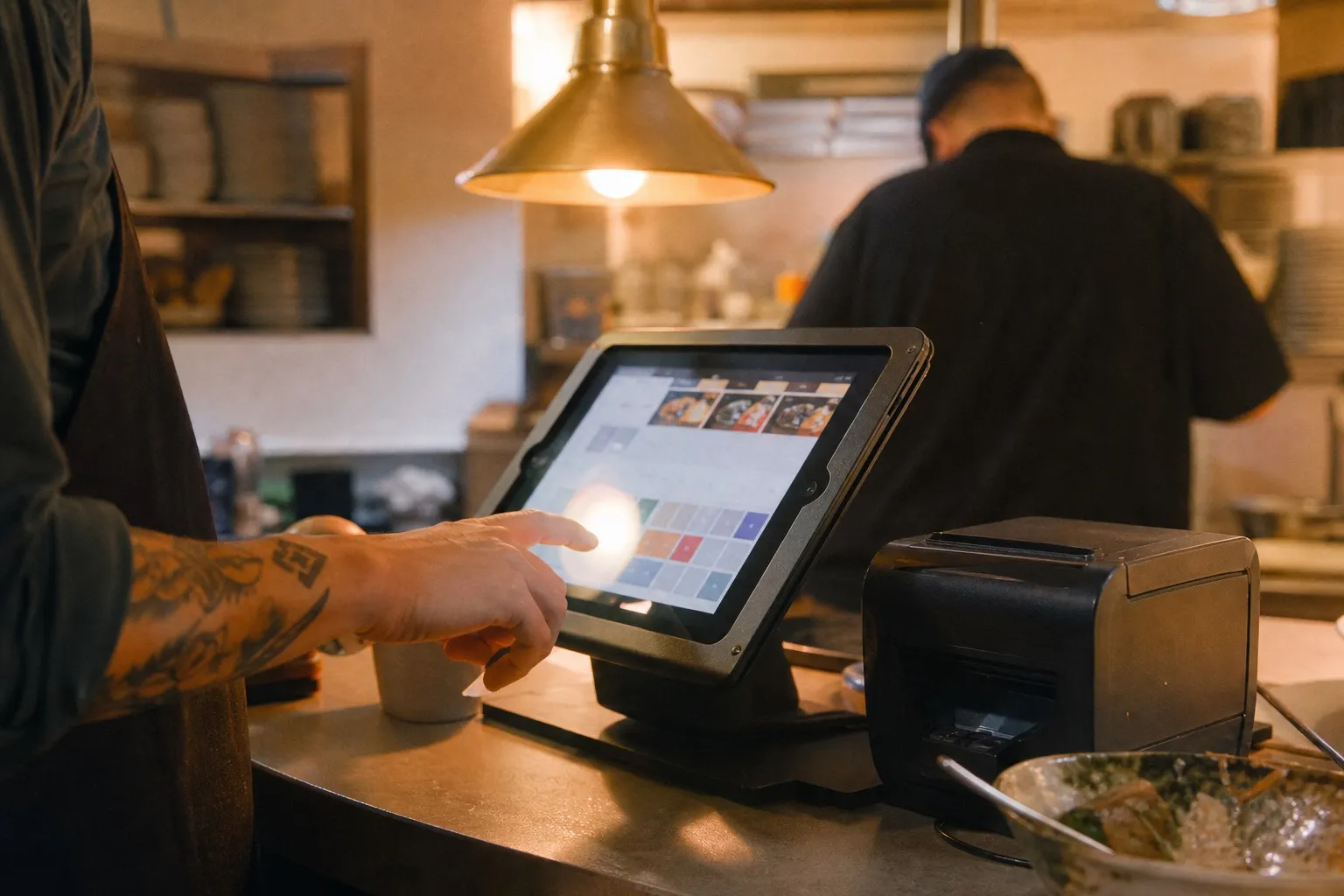
The corollary for F&B, my beat: the in-stay spend hotels have chased for a decade — minibar that’s actually used, room-service that doesn’t lose money, lobby bar as profit center — only works when it’s wired into the same payment and guest object as the room. PMS-as-control-layer is the unlock. It’s why I care about a hotel-software round at all.
We’ll have more on distribution in a piece we later publish on the discovery layer. And our subsequent coverage of hotel-tech ad ecosystems picks up where the marketing dollars get re-pointed once the PMS is the system of record.
For now: Mews just became the best-capitalized independent hotel PMS in the market. Tiger Global doesn’t write $75M checks into category losers. The collapse inward is real. The interesting question for the next twelve months isn’t whether Mews wins — it’s what they buy with the money.
— Naomi covers hotel F&B and operations. Tips: [email protected].
Featured
More
Browse all 494 posts
The Voice Agent Maturity Curve
mise
·12 min read
The Four Margins of a Restaurant
mise
·14 min read
The AI Premium in Hospitality M&A: Broker Story or Real Number?
the bottom line
·9 min read
What the DoorDash/SevenRooms Deal Actually Buys
the bottom line
·11 min read