Yelp Host vs. Toast IQ vs. SevenRooms: The Operator's AI-Phone Buying Guide

Three vendors, three pricing models, three opinions on where the phone belongs. A field guide for operators deciding which AI receptionist to actually pay for in Q4 2025.
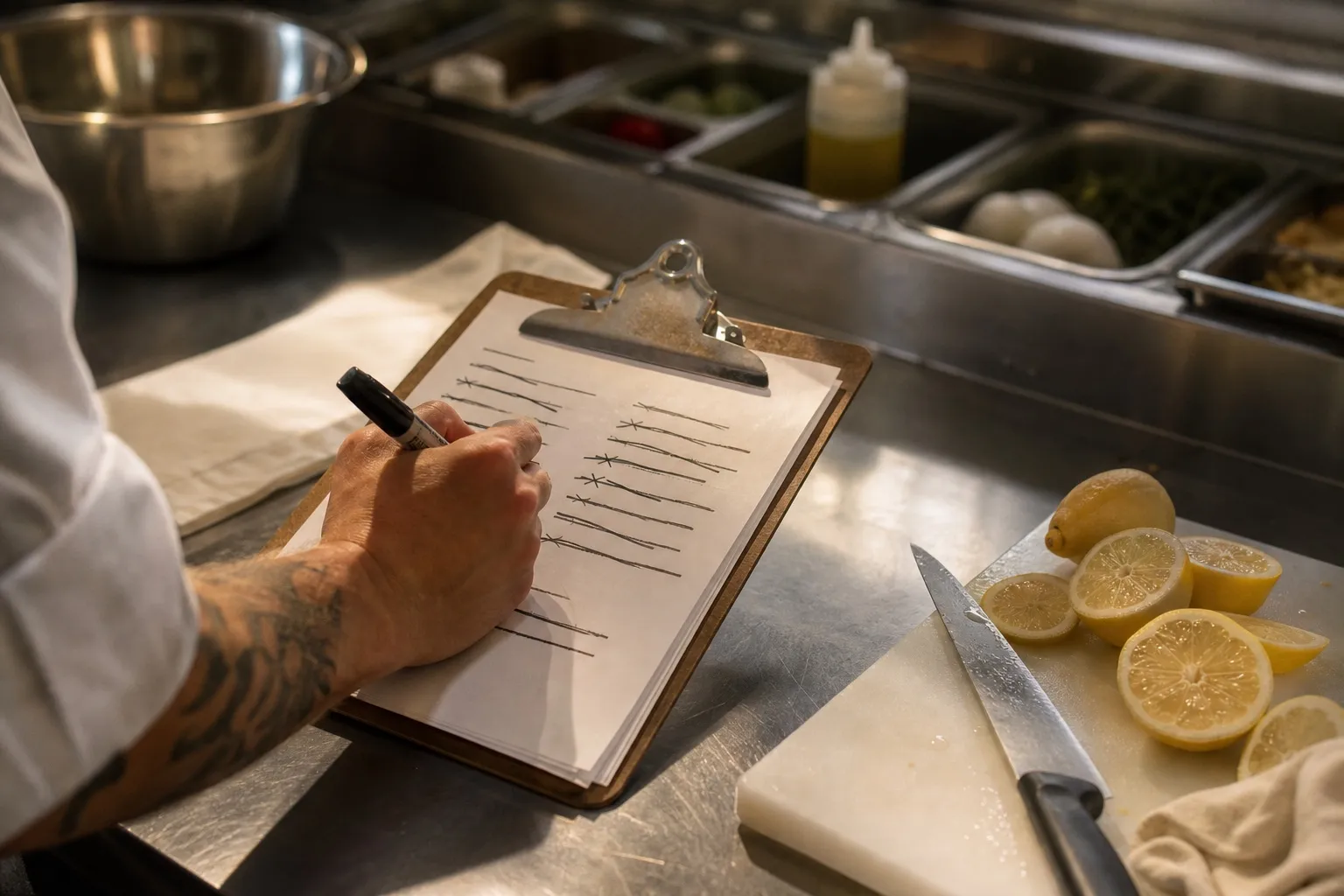
The first time I watched a general manager comparison-shop AI phone agents, she did it standing up. Her name is Reema, she runs a forty-two-seat trattoria off Valencia in the Mission, and she had three open tabs on a laptop balanced on the host stand: Yelp’s brand-new Host product page, a Toast partner deck a sales rep had emailed her that morning, and a SevenRooms terms-of-service document somebody on the operators’ Slack had pasted into a thread. Between covers she answered the actual phone, which rang seven times in the half-hour I was there. Twice it was a reservation. Once it was a vendor. Once it was a woman trying to reach the dry cleaner two doors down. The other three were silent — the kind of dropped-call hang-ups that nobody bothers to count and every operator quietly hates.
“I know I need one of these,” she said, gesturing at the laptop. “I just can’t tell which one is for me.”
That, as of this morning, is the right question. Today, October 21, Yelp formally announced Yelp Host and Yelp Receptionist — its AI front-of-house bundle that wraps an answering agent, a reservations layer, and the company’s existing Guest Manager into a single subscription, with pricing that starts at $99 a month if you already pay for the platform and $149 a month if you don’t (Yelp Press; Yelp Blog). Toast has telegraphed an analogous product, Toast IQ, a conversational assistant scheduled for formal launch on October 29 across what the company describes as roughly one hundred and forty-eight thousand restaurant locations (Restaurant Technology News). And SevenRooms — quietly, in the way SevenRooms tends to do things — has been listing “Voice AI” in its product-specific terms for weeks, available as an add-on to its existing reservations platform (SevenRooms Product Terms).
Three vendors. Three pricing philosophies. Three opinions about where the phone actually belongs in your stack. The contrarian take, which I’ll defend in the rest of this piece, is this: the right answer does not depend on which agent is “smartest.” It depends on two boring, operator-grade questions — where your reservations live today, and how much you already pay Yelp for advertising. Get those two right and the rest of the decision is downstream. Get them wrong and you’ll spend a year migrating booking data between systems while a chatbot picks up the phone on top of a stack it doesn’t understand.
This is a buying guide, not a benchmark. I’ll walk through the three options, lay out a decision matrix, and end with the ROI math I’d use if I were sitting at Reema’s host stand. The takes are mine. The numbers are the vendors’.
What Yelp Actually Launched This Morning
Yelp’s announcement today is bigger than the AI-phone piece, but the AI-phone piece is what operators will feel. The company is bundling three things under one umbrella: Yelp Receptionist (the answering agent), Yelp Host (the reservations and waitlist tooling), and Yelp Guest Manager (the existing CRM-shaped layer that ties guest profiles to bookings). Receptionist is the new thing. Host and Guest Manager are repackaging.
Pricing, as published today, is the cleanest of the three vendors I’m comparing — and that clarity is itself a competitive move. Yelp Host runs $149 per month for a single location, or $99 per month if you already subscribe to Yelp Guest Manager (Yelp Blog). The Receptionist agent sits inside that price; there is no separate per-call meter, no per-minute rate, no surprise overage line. For an operator who has spent the last six months negotiating with third-party voice vendors charging a quarter per minute, that flat-fee structure feels like an exhale.
What the agent actually does, on paper: it answers calls in English and Spanish, takes reservations directly into the Host system, answers FAQs about hours and location, captures voicemail with transcription, and — critically — hands off to a human when it can’t resolve a request. It does not, today, take orders. It does not handle catering. It does not, as best I can tell from the press materials, route to a sommelier line or a private-dining inbox without custom configuration.
The strategic logic is the one I sketched in an upcoming May piece on the Yelp AI stack: Yelp does not want to be a SaaS company that happens to own a directory. It wants to be an AI-mediated discovery layer where the agent represents the consumer on the inbound and represents the restaurant on the outbound, and the directory is the substrate underneath. Receptionist is the restaurant-side half of that pincer. If you already pay Yelp for advertising — and a meaningful fraction of independent operators do — Receptionist is being priced as the upsell that makes the ad spend defensible. “You’re already paying us to bring guests to your page; now pay us a little more so we can actually answer when they call.”
I think that’s a credible pitch. I also think it’s a pitch that gets less compelling the further away from Yelp’s advertising flywheel your restaurant lives.
Toast IQ: Anticipated, Bundled, and Aimed at the POS Customer
Toast’s move is the structurally bigger one, and it is also the one operators can’t fully evaluate yet. Toast IQ has been announced and is anticipated to formally launch on October 29 — a week from tomorrow — across roughly one hundred and forty-eight thousand restaurant locations that already use Toast’s point-of-sale (Restaurant Technology News). The framing in the pre-launch coverage is “conversational AI assistant,” which is doing a lot of work — IQ is positioned as a horizontal layer that spans operations, reporting, menu management, and customer-facing voice, not as a single phone-agent SKU.
What we know today, from announcements and partner briefings, is that the voice-facing piece will be bundled. There will not be a separate $149-a-month line item the way Yelp has structured it. Toast IQ is being framed as part of the platform an operator already pays for — included or near-included, depending on which Toast tier you’re on. The pricing detail is forthcoming with the formal launch, and I want to be careful here: I’m describing what has been announced as anticipated, not what has shipped to general availability. Some of the capabilities being demoed in partner channels are gated, staged, or behind a beta flag that not every Toast customer will see on day one. I’ve covered the broader IQ rollout in a forthcoming May piece that walks through the staged-availability question in more detail.
But the strategic shape is already clear, and it’s the shape that should matter most to an operator making a Q4 buying decision. Toast IQ is a phone agent that lives downstream of the POS, not downstream of the reservations book. That distinction matters more than it sounds. If your bottleneck is takeout calls, modifier questions, “what’s on the menu tonight” inquiries, and operational queries that the host can’t answer without walking to the line — the POS is the right substrate for the agent, because the POS is where the menu, the prep status, and the order history actually live. If your bottleneck is reservations, the POS is the wrong substrate, because Toast’s reservations product is younger and lighter than the reservation-native incumbents.
For a Toast-anchored operator — somebody who already runs POS, online ordering, and payroll through Toast — the IQ bet is close to automatic. You wait the eight days, you turn it on when it ships, you fold the voice handling into the platform you already trust. For a non-Toast operator, Toast IQ is irrelevant: you would not switch your POS to get a phone agent, and Toast has not signaled any interest in selling IQ as a standalone module.
SevenRooms Voice AI: The Quiet One
SevenRooms’s entry into this category is the one I expect most operators to overlook, and the one I’d argue gets unfairly discounted in the Yelp-vs-Toast framing. The company has not held a launch event for Voice AI. It has not issued a press release. It has, however, published “Voice AI” as a named product in its product-specific terms — the legal document that defines what each SevenRooms SKU does and what data each one touches (SevenRooms Product Terms). When a vendor adds a product to its terms-of-service page, the product has moved from roadmap to commercially available. That’s not a marketing claim; that’s a contracts claim.
Pricing is not public. SevenRooms historically sells in custom-quote tiers anchored to property count and feature mix, and Voice AI sits inside that quoting model. From operators I’ve talked to who have priced it, the add-on lands in a range that is comparable to a per-location SaaS fee — meaningfully higher than Yelp Host on a sticker basis, but bundled with capabilities Yelp Host does not have: deep guest profiles, automation rules tied to spend and visit history, the upmarket reservations features that make SevenRooms the default for fine-dining and hotel F&B operators.
The buyer for SevenRooms Voice AI is not Reema’s trattoria. The buyer is a forty-cover tasting-menu room with a $300 average check, a wait list managed by a maître d’, and a guest list that includes regulars who get specific tables. For that operator, the value of the AI agent is not “answer the phone faster”; it’s “answer the phone in a way that recognizes the caller, references the last visit, and routes a VIP differently from a walk-in.” Yelp Host, as priced and positioned today, cannot do that. SevenRooms can — because it has been building the guest-profile substrate the agent needs for a decade.
I wrote about the SevenRooms-versus-Tablecheck competitive shape in a forthcoming May piece that goes deeper on the upmarket-versus-mass-market split. The shorthand version: SevenRooms is for operators whose business depends on knowing the guest, and Voice AI extends that knowing-the-guest claim onto the phone line. It is not the cheapest option. It is, for the right operator, the only option.
The Loman-OpenTable Precedent
Before I lay out the decision matrix, one more vendor worth naming — not because I think most operators should pick it, but because it sets the prior. Loman, an independent voice-agent vendor, has integrated with OpenTable for a couple of years now. Operators on OpenTable who wanted an AI phone agent before this fall had Loman as their primary serious option, and a few thousand restaurants are running that stack today.
The Loman-OpenTable precedent matters for two reasons. First, it proves the category works — the phone-agent-on-top-of-an-existing-reservations-platform model is not theoretical. Second, it sets a price point. Loman has historically charged in the low hundreds per month, sometimes with per-call or per-minute components depending on the plan. That’s the comp Yelp is implicitly underpricing against by publishing a flat $99 / $149 number. And that’s the comp SevenRooms Voice AI is implicitly outpositioning by saying, in effect, “yes, third-party integrations exist, but the native one understands your data model better.”
If you are on OpenTable today and you do not want to migrate, the Loman path is still the cleanest. None of what Yelp, Toast, or SevenRooms announced this fall obviates that. The buying question changes only if you are willing to move your reservations book — which, for most operators, is a once-every-three-years decision and not a quarterly one.
The Decision Matrix
Here is how I’d actually frame the choice. There are two binary questions that, taken together, sort operators into four quadrants. The questions:
1. Where do your reservations live today? Yelp Guest Manager, OpenTable, Resy, SevenRooms, Tock, Tablecheck, a paper book, or “we don’t really take reservations.” The answer here is structural — switching reservation platforms is painful, and operators who change platforms more than once every three years are usually doing it because something went badly wrong.
2. Do you spend more than $500 a month on Yelp ads? This is a proxy for “Yelp is meaningful to your inbound funnel.” If the answer is yes, Yelp’s bundle pricing math changes — the AI phone agent gets absorbed into a marketing line you’ve already written off, and the question becomes “why wouldn’t I.” If the answer is no, the bundle’s main appeal evaporates and you’re buying Yelp Host on its standalone merits.
Combine those, and you get four quadrants:
Quadrant A — Yelp-anchored reservations, meaningful Yelp ad spend. Buy Yelp Host. The bundle math is unbeatable, the reservations integration is native, and you are already paying into the ecosystem. The $99-with-Guest-Manager price is, frankly, the most aggressive entry point I have seen any major vendor publish in this category. This is Reema’s trattoria, and it is a meaningful fraction of independent neighborhood restaurants in second-tier metros.
Quadrant B — Yelp-anchored reservations, low Yelp ad spend. Buy Yelp Host, but evaluate it the way you’d evaluate a standalone vendor. The $149 standalone price is reasonable but no longer the obvious winner — at that price you’re comparing it against SevenRooms Voice AI on capabilities, not on bundle math. For most operators in this quadrant, Yelp Host still wins because the reservations data lives there, but the decision is closer than the marketing makes it sound.
Quadrant C — Non-Yelp reservations, Toast POS. Wait for Toast IQ to ship on the 29th, evaluate the voice handling honestly when it does, and default to it if it clears a low bar. The bundling math is functionally similar to Yelp’s — the agent is being absorbed into a platform fee you’ve already accepted — and the upside is that the agent has visibility into the POS, the menu, and operational state. If Toast IQ underperforms in beta, the fallback is to keep your existing reservations platform and bolt a third-party agent on top.
Quadrant D — Non-Yelp, non-Toast, upmarket guest-experience focus. SevenRooms Voice AI is the right answer for operators whose unit economics depend on recognizing the guest. If you’re not in that bucket — high-volume neighborhood spot, fast-casual, takeout-heavy — SevenRooms is over-spec for what you need, and a third-party agent on whatever reservations platform you run today (Loman on OpenTable, the various ones layered onto Resy, similar shapes onto Tock) is the more economical answer.
Two notes on the matrix. First: I have deliberately excluded “build your own” from the choice set, because for the operators reading this piece, building your own is not a real option. Second: the matrix is about the buying decision today, in late October 2025. The voice-agent category is moving fast enough that this matrix should be revisited every six months. I’ve sketched what a maturity model for voice agents in hospitality should look like in an upcoming May framework piece.
What These Agents Cannot Yet Do
Before I get to the ROI math, the candid section. None of these agents — Yelp Receptionist, Toast IQ as anticipated, SevenRooms Voice AI — can do everything an operator might hope. Five things to be honest about:
Complex menu modifications. A caller who asks “can you do the duck without the cherries, with the celery-root purée from the tasting menu, and a side of the bone marrow that’s not on tonight’s menu” is going to get handed off. All three agents will, correctly, defer to a human on edge-case modifications. That’s the right design choice. It’s also the choice that means you cannot let the host stand atrophy entirely.
Private dining and events. Inquiries that span more than a single reservation — buyouts, large parties, multi-course set menus — route to a human in all three systems. SevenRooms has the best events module of the three, but its agent is not authorized to commit to a buyout. Plan for that.
Off-script questions. “Do you have a sommelier on tonight?” “Is the chef in?” “Was there a piece in the Chronicle about you last week?” The agents handle FAQs that are configured in advance, and they punt on questions that aren’t. That punt rate is the number to ask vendors about during the pilot — not the headline call-deflection percentage.
Outbound at scale. Today, all three are inbound-first. Outbound capabilities — confirmation calls, re-engagement campaigns, no-show follow-ups — are roadmap items in some cases and not-yet-mentioned in others. If outbound is the use case you’re solving for, you are buying on the come.
Multilingual depth. English-and-Spanish is the baseline. Mandarin, Cantonese, Tagalog, Vietnamese, Korean, Russian, Arabic, Portuguese — coverage thins out fast. For operators in metros where a significant fraction of inbound calls are not in English or Spanish, this is a real constraint and worth pressing the vendor on directly.
I list these not to talk operators out of the category. The category is real, the value is real, and the price points published today are at the level where the math works for most independents. I list them so that the pilot is framed honestly. “AI answers every call perfectly” is the wrong success criterion. “AI handles seventy percent of inbound calls cleanly, defers the rest, and costs less than a part-time host on weekends” is the right one.
The ROI Math
Here is the version I’d walk Reema through if I were sitting at her host stand. Numbers are illustrative but anchored to ranges I’ve seen in operator conversations this fall.
Start with the cost of a missed call. For a forty-two-seat restaurant doing a $58 average check, a missed reservation call costs — on the assumption that the caller does not call back, which is the right assumption for a Tuesday at 6:45 PM — about one cover, or $58 in lost revenue. Industry benchmarks I’ve heard cited (and have not independently verified) suggest somewhere between fifteen and thirty percent of inbound calls go unanswered during service. Take the conservative end: fifteen percent of, say, two hundred and fifty calls a month is thirty-seven and a half missed calls. Assume one in three of those was a reservation that did not call back. That’s roughly twelve and a half lost covers a month, or $725 in lost revenue. Take the aggressive end and the number doubles.
Against that, $99 a month for Yelp Host with bundled Receptionist needs to recapture roughly one and a third covers per month to pay for itself. That is, by an order of magnitude, the easiest ROI math I have ever written for a hospitality software product. Even at the standalone $149 price, the breakeven is about two and a half covers a month. For Toast IQ, where the pricing is bundled but the platform fee is higher than Yelp’s, the breakeven is harder to compute cleanly — but if you are already paying Toast for the platform, the marginal cost of the IQ voice layer is close to zero, and the breakeven is whatever the platform-fee delta is over your prior setup. For SevenRooms Voice AI at a per-location add-on rate, the breakeven climbs — but for the upmarket operator that fits the SevenRooms buyer profile, a single recovered VIP reservation a month often clears the cost.
This is the moment where the contrarian thesis of this piece becomes load-bearing. The agent’s quality matters less than the structural fit to your stack and ad-spend posture. A seventy-percent-effective Yelp Receptionist at $99 a month, sitting on top of Yelp reservations and Yelp ads you were going to pay for anyway, will outperform a ninety-percent-effective third-party agent that you are duct-taping onto a reservations platform it half-integrates with. The economics push that way. So does the operational simplicity. So, I’d argue, does the failure mode — when the third-party integration breaks, you’re calling two vendors and they’re each pointing at each other. When the native integration breaks, you’re calling one.
There are operators for whom this generalization fails. SevenRooms-anchored upmarket rooms are the cleanest counterexample, because the guest-data substrate is what makes the agent worth having in the first place. But for the median independent operator, the buying decision is structural and the agent quality is downstream. I’d rather have the second-best agent on the right substrate than the best agent on the wrong one.
Pilot Discipline
A few last operator notes on the pilot phase, which is where most of these decisions actually get made.
Run a parallel test before you switch. For thirty days, let the AI agent take a fraction of inbound calls — fifty percent is a reasonable starting split — and route the rest to your existing handling. Compare reservation-completion rates, average call length, and the punt-to-human rate honestly. Vendors will hand you dashboards; build a manual count too, because the dashboards measure what the vendor wants measured.
Listen to the recordings. All three of these products record the calls. Most operators sign up, look at the summary metrics, and never actually listen. Listen to twenty calls in the first week and twenty more in the third week. You will catch tone issues, mispronunciations of your restaurant’s name, and accent-handling failures that the dashboards will never surface.
Negotiate the exit. The published prices are public; the contract terms aren’t. Push for a thirty-day out clause for the first ninety days, and push hard for it. Vendors in a land-grab phase — and this is a land-grab phase — will give that to you if you ask. Operators who don’t ask end up trapped in annual contracts during a category that is moving on a quarterly cadence.
And finally: do not let the AI agent become a reason to under-staff the host stand. Every operator I have talked to who has done this category well treats the agent as a force-multiplier for a human host, not a replacement. The agent handles the trivial calls; the human handles the calls that matter. That allocation makes the human better at the part of the job that justifies the wage. Treating the agent as a way to cut headcount is the failure mode I see most often, and it shows up six months later in guest-experience scores that nobody can quite explain.
The Mark Interpretation
The thing to mark in your operator notebook this morning is not that Yelp shipped a voice product. It is that, for the first time, every major restaurant-tech platform has either shipped a voice product or telegraphed one within the same eight-day window. That clustering tells you the category has gone from “interesting” to “table stakes,” and operators who do not have a buying plan by the end of Q4 will be making the decision under duress in Q1.
The contrarian thesis I opened with — that the choice is structural, not technical — is more important now, not less, because all three vendors will spend the next year telling you their agent is the smartest. That’s the wrong axis. The right axis is where your reservations live and how much you already pay Yelp. The agents will converge in quality. The substrate they sit on will not. Pick the substrate first. The agent comes with it.
Reema, when I left, had narrowed it to two tabs. Yelp Host and the third-party option her OpenTable rep had floated. She is in Quadrant B — Yelp ads modest, reservations on a non-Yelp platform she’s used for years and likes — and the decision is genuinely close for her. She’ll probably try the Yelp bundle, give it ninety days, and decide based on what the recordings sound like. That is the right process. It is not a triumphant ending, but operators do not get triumphant endings. They get sensible ones, and sensible is the bar this category is finally clearing.
The phone, by the way, rang twice more while I was packing up. Once it was a reservation. Once it was silent.
— Priya covers operators for TableTransfers. Tips: [email protected].
Featured
More
Browse all 494 posts
The Voice Agent Maturity Curve
mise
·12 min read
The Four Margins of a Restaurant
mise
·14 min read
The AI Premium in Hospitality M&A: Broker Story or Real Number?
the bottom line
·9 min read
What the DoorDash/SevenRooms Deal Actually Buys
the bottom line
·11 min read